
The Physics of Hygiene: Sterilization, Odor Control, and the Sterile Kitchen
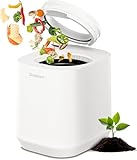
The kitchen is a biological battlefield. It is where we bring raw organic matter—meat, vegetables, dairy—and prepare it for consumption. But the moment that matter becomes “waste,” it transforms into a hazard. Bacterial colonies multiply exponentially. Mold spores launch into the air. Fruit flies detect the fermentation products of rotting fruit from miles away.
Traditional waste management—the trash can—is a passive containment strategy. It does not stop the rot; it merely hides it.
The electric composter, exemplified by the Ouaken JF6001A, introduces an active strategy: Sterilization and Stabilization.
It is not just a garbage disposal; it is a bio-safety device. By applying the principles of Thermal Sterilization and Adsorption Chemistry, it neutralizes the biological threats inherent in food waste. This article explores the physics of killing pathogens and capturing odors to create a truly hygienic home environment.
The Thermodynamics of Sterilization: The Kill Zone
To understand why the Ouaken composter is a hygiene tool, we must look at the survival curves of microorganisms.
Bacteria like Salmonella, E. coli, and Listeria thrive at room temperature (20-25°C). They require moisture and nutrients to replicate.
The Ouaken machine attacks these prerequisites with Heat.
Thermal Death Time (TDT)
Microbiology defines Thermal Death Time as the time required to kill a specific bacteria at a specific temperature.
* Pasteurization: Typically 60-75°C. Kills most pathogens but leaves some spores.
* Sterilization: Typically >100°C. Kills vegetative bacteria, fungi, and viruses.
The Ouaken operates at temperatures high enough to boil water out of the food. This means the internal temperature of the biomass exceeds 100°C for a sustained period (the drying cycle lasts ~3 hours).
In this Kill Zone, protein structures in bacteria denature (unfold), and cell membranes rupture.
* The Result: The output is statistically sterile. Unlike a compost pile, which relies on thermophilic bacteria to generate heat (often unevenly), the electric composter applies external heat uniformly. You can handle the output with bare hands without fear of pathogen transfer.
Removing the Medium of Life: Water Activity (a_w)
Heat kills the current population, but Dehydration prevents future growth.
Microbes need free water to survive. Food scientists measure this as Water Activity (a_w).
* Fresh meat/veggies: a_w > 0.95 (Ideal for bacteria).
* Dried compost output: a_w < 0.60 (No microbial growth possible).
By reducing the waste to a crisp, dry state, the machine ensures that even if spores land on it later, they cannot germinate. The waste becomes Biologically Stable. It won’t rot, mold, or smell, even if stored in a jar for a year.

The image above shows the Reaction Chamber. The aluminum bucket is not just a container; it is a thermal conductor designed to transfer heat from the element to the waste efficiently, ensuring no “cold spots” where bacteria could survive.
The Chemistry of Odor: Capturing Volatiles
Rotting food smells because bacteria produce Volatile Organic Compounds (VOCs) like Putrescine (rotten meat), Hydrogen Sulfide (rotten eggs), and Ammonia.
Even during the drying process, these smells are liberated.
To be “Odorless,” the machine must capture these molecules before they escape into the kitchen.
The Ouaken uses a Large Capacity Activated Carbon Filter.
Adsorption Kinetics
Activated carbon works via Adsorption (adhesion to surface), not absorption.
* Surface Area: A single gram of activated carbon has a surface area of >1000 m^2.
* Pore Size Distribution: The carbon has micropores (<2nm), mesopores (2-50nm), and macropores (>50nm). Different sized odor molecules get trapped in different sized pores.
The filter acts as a molecular sieve. As the hot, moist air containing VOCs is pushed through the filter by the fan, the VOCs are attracted to the carbon surface by Van der Waals forces.
The “1000-hour” lifespan of the filter refers to its Saturation Point. Eventually, all the binding sites are filled. The Ouaken’s filter alert system is a crucial feature, acknowledging that odor control is a finite chemical resource that must be replenished.
Pest Control: Breaking the Cycle
Fruit flies and cockroaches are attracted to the fermentation byproducts (ethanol, acetic acid) of rotting food.
A trash can is a beacon for pests.
By dehydrating the waste, the Ouaken removes the Attractant Signal. Dry biomass does not ferment; it does not release the chemical plumes that guide insects.
Furthermore, if any fruit fly eggs were present on the banana peels you threw in, the 100°C heat destroys them instantly.
This breaks the reproductive cycle of kitchen pests. It is a Physical Insecticide without chemicals.
Conclusion: The Hygiene Engine
The Ouaken JF6001A is more than a composter; it is a Hygiene Engine.
It replaces the passive, rotting environment of the trash bin with an active, sterilizing process.
It addresses the three pillars of kitchen biological safety:
1. Pathogen Elimination (via Heat).
2. Growth Inhibition (via Dehydration).
3. Vector Control (via Odor/Pest removal).
For the modern household, this is a shift from “Waste Management” to “Bio-Safety.” It turns the most dangerous item in the kitchen (the rotting garbage) into an inert, safe material.