
Beyond the Metal Key: The Sociology of Digital Access Control
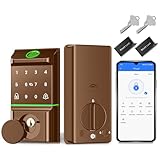
For most of history, access to a space was binary: you either had the key, or you didn’t. Sharing access meant physically handing over a piece of metal—an act fraught with risk. You couldn’t take the key back remotely. You couldn’t know if it had been copied.
The GGUU 2406A Security Smart Lock transforms access from a physical object into a digital permission. This shift from “Hardware” to “Software” has profound sociological and economic implications, particularly in the era of the Gig Economy and the Shared Home. This article explores the concept of Granular Access Control, the psychology of the “Audit Trail,” and how smart locks are enabling new models of trust.
Granular Access: The End of the “Master Key”
The GGUU app allows administrators to generate different types of passwords: Permanent, Time-Limited, and One-Time. This granularity changes the nature of trust.
The Contractor Scenario
In the analog world, letting a plumber in meant leaving a key under the mat (zero security) or staying home from work (high cost).
With a One-Time Password (OTP), you grant access for a single event. Once used, the code destroys itself. The risk of a copied key is eliminated.
* Time-Limited Codes: For a dog walker or house cleaner who comes every Tuesday at 10 AM, you can set a recurring code that only works during that window. This enforces a temporal boundary on their access.
The Airbnb Economy
For short-term rental hosts, the GGUU lock is an automated check-in desk. You can generate a code valid from Check-In (3 PM Friday) to Check-Out (11 AM Sunday).
* The Expiration: At 11:01 AM on Sunday, the code expires. The guest cannot re-enter. This digital enforcement of the rental contract removes the awkwardness of evicting lingering guests and eliminates the cost of lost keys.
The Audit Trail: Surveillance and Peace of Mind
Every time the GGUU lock is opened, it logs the event. “Unlocked by Mom via Fingerprint at 5:15 PM.” “Unlocked by Cleaning Lady via Passcode at 10:00 AM.”
This Audit Trail provides a layer of passive surveillance.
* The Latchkey Kid: For working parents, the notification “Door Unlocked by [Child’s Name]” is a signal of safety. They know their child is home from school without needing to call.
* Deterrence: Knowing that entry is logged acts as a deterrent for service personnel who might otherwise snoop or enter at unauthorized times.
The IC Card: Bridging the Generational Divide
Not everyone has a smartphone or perfect fingerprints. The elderly often have worn fingerprints (low ridge definition) that fail on capacitive sensors. Young children may not remember complex codes.
The GGUU includes IC Cards (RFID Tags).
* Accessibility: These cards tap into the NFC/RFID reader. They are physical tokens like keys, but easier to use (no turning required) and, crucially, Revocable. If a child loses their card, you delete it from the app. You don’t have to change the lock. This makes the system inclusive for all generations within a household.
The Psychology of Auto-Lock
We have all experienced the “Did I lock the door?” panic after driving away.
The GGUU features Auto-Lock (customizable timer).
* Cognitive Offloading: By outsourcing the act of locking to the machine, the user frees up mental bandwidth. The door is always locked. This default state of security reduces anxiety and eliminates a common daily stressor.
Conclusion: Access as a Protocol
The GGUU 2406A proves that a lock is no longer just a mechanical barrier; it is a protocol. It defines the rules of who, when, and how someone enters your sanctuary.
By digitizing these rules, it allows for a fluid, flexible, and revocable system of trust. It enables the modern home to be permeable when necessary (for guests, services) and impenetrable when needed, all without the friction of a metal key.