The Physiology of Flow: Unlocking Lymphatic Health and Spinal Vitality Through Passive Oscillation
In the grand design of human evolution, stillness was never part of the plan. For millions of years, the human body was engineered for continuous, low-intensity motion. Our ancestors walked, foraged, and moved constantly across varied terrain. This perpetual motion did more than just burn calories; it acted as the primary mechanical engine for our internal physiological systems. The pumping of fluids, the hydration of spinal discs, and the regulation of our nervous systems were all predicated on the assumption that we would be moving.
However, the trajectory of modern civilization has led us into a profound “Stagnation Crisis.” We have engineered movement out of our daily lives. We commute in seated vehicles, work in seated environments, and relax in seated postures. While our minds are more active than ever, our bodies have entered a state of unprecedented dormancy. The consequences of this shift are not merely cosmetic issues like weight gain; they are fundamental physiological disruptions. We see rising rates of edema (swelling), chronic spinal compression, and a nervous system stuck in a perpetual state of “fight or flight” because it lacks the rhythmic somatic input that signals safety.
Addressing this crisis requires more than just an hour at the gym. It requires a fundamental rethinking of how we integrate motion into our resting states. This brings us to the concept of Passive Aerobic Exercise—a therapeutic modality that seeks to restore the body’s natural internal rhythms without the stress of high-impact exertion. By utilizing tools designed to mimic the body’s innate oscillatory patterns, such as the “goldfish movement,” we can artificially re-engage the dormant biological pumps that keep us alive, vibrant, and pain-free. This article delves deep into the science of passive kinetics, exploring how rhythmic oscillation serves as a key to unlocking lymphatic flow, spinal decompression, and autonomic balance in a sedentary world.
The Hydraulic Imperative: Understanding Lymphokinetics
To truly appreciate the value of passive motion, we must first understand the “hidden river” within us: the lymphatic system. While the cardiovascular system gets all the glory with its powerful central pump (the heart), the lymphatic system is arguably just as critical for long-term health, yet it operates under a significant disadvantage. It has no pump.
The Anatomy of the “Sewage System”
The lymphatic system is a vast, complex network of vessels, nodes, and organs responsible for maintaining fluid balance, absorbing fats, and, most importantly, removing cellular waste, toxins, and pathogens. It is the body’s sewage treatment plant. Every cell in your body produces metabolic waste. This waste is dumped into the interstitial fluid surrounding the cells. The lymphatic system’s job is to vacuum up this fluid, filter it through lymph nodes, and return the clean fluid to the bloodstream.
However, unlike blood which is propelled by the heart’s contractions, lymph fluid relies entirely on external mechanical forces to move against gravity. It depends on:
1. Muscular Contraction: The squeezing action of muscles during movement pushes fluid through the vessels.
2. Respiratory Pressure: The changes in thoracic pressure during deep breathing act as a vacuum.
3. Arterial Pulsation: The rhythmic pulsing of nearby arteries can gently nudge lymph vessels.
When we are sedentary, these forces vanish. The “sewage system” backs up. This stagnation leads to a condition known as lymphostasis. In the short term, this manifests as puffy ankles, heavy legs, and brain fog. In the long term, chronic lymphatic stagnation can impair immune function, increase inflammation, and contribute to fibrotic tissue changes.
The Mechanics of Passive Pumping
This is where the science of passive oscillation becomes revolutionary. Devices designed to create a rhythmic, wave-like motion—often originating at the ankles—generate a systemic ripple effect throughout the body. This motion creates a unique hydraulic phenomenon.
As the legs are swung side-to-side, alternating pressure is applied to the calf muscles (the “secondary hearts” of the body) and the deep lymphatic vessels in the legs and groin. This motion mimics the mechanical pumping action of walking but without the gravitational load or cardiovascular stress. It essentially manually operates the lymphatic pump.
Furthermore, the specific frequency of oscillation—typically designed to match the body’s natural resonance—enhances the opening and closing of the “lymphatic angions” (segments of lymph vessels). The rhythmic motion encourages the one-way valves within these vessels to open, allowing stagnant fluid to be pushed upward toward the thoracic duct for elimination. This explains why users often experience an immediate reduction in lower limb swelling and a sensation of lightness after a session. It is not magic; it is simple fluid dynamics applied to human physiology.
Spinal Mechanobiology: The Art of Decompression
Beyond the fluids, our structural integrity—specifically the spine—is the second major casualty of the modern sedentary lifestyle. The human spine is an architectural marvel, designed to bear weight and facilitate movement. However, it is also a structure that relies heavily on movement for its own survival.
The Problem of Static Loading
When we sit, gravity acts vertically on the spine. This axial loading compresses the intervertebral discs—the soft, gel-filled cushions between the vertebrae. Unlike muscles, discs have very poor blood supply (they are avascular). They cannot simply receive nutrients from arteries. Instead, they rely on a process called imbibition.
Imbibition is like a sponge mechanism. When the spine moves, pressure changes cause the discs to suck in nutrient-rich fluid and expel waste products. When we sit still for hours, the discs are under constant compression. They get squeezed dry, becoming dehydrated, brittle, and prone to herniation. This is the root cause of much of the chronic lower back pain seen in office workers. The “sponge” has been squeezed but never released to soak up water again.
The “Goldfish” Solution
Passive oscillation addresses this through a specific movement pattern often referred to as the “Goldfish Method.” When the body is in a supine position (lying flat), gravity is no longer compressing the spine axially. The spine is unloaded.
In this neutral position, the side-to-side swinging of the legs creates a sinusoidal wave that travels up the spinal column. This wave motion generates gentle, rhythmic traction and mobilization between each vertebra. It gently rocks the vertebrae back and forth, creating the pressure differentials necessary for imbibition.

This is not a high-force manipulation like a chiropractic adjustment. It is a subtle, continuous mobilization. It encourages the re-hydration of the discs and helps to break up micro-adhesions in the fascia surrounding the spine. For individuals with stiffness or minor misalignments, this passive motion can act as a “reset” button, restoring the natural S-curve of the spine and alleviating the pressure on impinged nerves. It utilizes the body’s own weight and momentum to perform a self-correction, which is why it is often tolerated better than active stretching by those with limited mobility.
Autonomic Tuning: Shifting from Fight to Flow
The third, and perhaps most profound, impact of passive aerobic exercise lies in the nervous system. We live in a world that keeps us in a chronic state of sympathetic arousal. This is the “fight or flight” mode—elevated heart rate, shallow breathing, tense muscles, and high cortisol levels. This state is necessary for survival in short bursts, but toxic when sustained.
The antidote is the parasympathetic state—”rest and digest.” This is where healing, tissue repair, and deep relaxation occur. However, switching modes is not as simple as flipping a switch. You cannot just “decide” to relax if your physiology is screaming “danger.”
The Rhythmic Entrainment Effect
Rhythmic motion has a potent effect on the nervous system. Just as rocking a baby soothes it, rhythmic bodily oscillation signals safety to the primitive brain. The steady, predictable, side-to-side motion of passive exercise acts as a somatosensory anchor. It entrains the brainwaves, encouraging a shift from high-frequency Beta waves (alert, anxious) to Alpha waves (relaxed, meditative).
This physical rocking stimulates the vestibulo-ocular reflex and the proprioceptors in the joints in a way that is inherently soothing. It lowers the heart rate and deepens the breathing without conscious effort. This is why many users report falling asleep or entering a “trance-like” state during a session. It is a bio-hack for stress management, using mechanical input to force a neurological down-regulation.
The sensation experienced immediately after the motion stops—often described as a “Champagne fizz” or “Chi rush” throughout the body—is the physiological signature of this shift. It is the sensory feedback of improved blood flow and reduced nerve tension, confirming that the body has moved from a state of restriction to a state of flow.
Implementation: The Role of Precision Tools
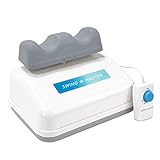
Understanding the science is the first step; implementing it effectively is the second. While one could theoretically have a partner shake their legs, the consistency, frequency, and duration required for therapeutic benefit are best achieved through precision technology. This is where devices like the Daiwa Felicity USJ-201 transition from being “gadgets” to being essential wellness tools.
Consistency and Control
The effectiveness of passive oscillation is dose-dependent. A random shaking motion is not the same as a calculated, rhythmic oscillation. The Daiwa Felicity USJ-201 is engineered to provide a specific arc of motion that maximizes the spinal wave effect without straining the joints.
The critical feature in any such tool is the ability to modulate the experience. No two bodies are the same. A frequency that feels relaxing to a petite individual might feel ineffective to a larger person. Conversely, a speed that invigorates an athlete might cause muscle guarding in a senior with arthritis.

The inclusion of variable speed controls allows for a concept called “Progressive Adaptation.”
1. The Acclimation Phase: New users can start at the lowest RPM. This introduces the motion to the vestibular system without causing dizziness or back strain. It allows the muscles to learn to trust the motion and relax, rather than tensing up against it.
2. The Therapeutic Phase: As the body adapts, speed can be increased to generate a more vigorous wave, deeper lymphatic pumping, and greater spinal mobilization.
3. The Safety Protocol: Features like the 15-minute auto-timer are not just conveniences; they are safety mechanisms. Passive exercise is potent. Over-stimulation of the lymphatic system can lead to a “healing crisis” or temporary fatigue as toxins are mobilized. Precise time limits ensure the therapy remains beneficial.
A Note on Contraindications
It is vital to approach this tool with the respect due to any therapeutic intervention. Because the motion travels up the kinetic chain to the head, alignment is key. Using a proper pillow to support the cervical spine is non-negotiable. Furthermore, while the machine facilitates decompression, those with acute structural instability (like fresh herniations or severe osteoporosis) must consult a medical professional. The goal is to facilitate health, not force movement upon a compromised structure.
Conclusion: Reclaiming the Rhythm of Life
In an era defined by sedentary habits, we cannot afford to leave our physiological health to chance. The “Stagnation Crisis” is real, and its effects are cumulative. Passive aerobic exercise offers a scientifically grounded, accessible bridge back to balance.
By understanding the principles of lymphokinetics, spinal mechanobiology, and autonomic regulation, we can see that devices like the Daiwa Felicity USJ-201 are not merely about “swinging legs.” They are about mechanically re-engaging the vital systems that evolution designed to be powered by movement. They allow us to invite flow back into our stagnant tissues, to hydrate our compressed spines, and to find a moment of rhythmic peace in a chaotic world. It is a reminder that life is movement, and sometimes, the most powerful move we can make is to lie down, let go, and let the rhythm take over.