
The Architecture of Taste: Texture Gradients and the Japanese Toast Philosophy
In Western culinary tradition, toast is a side dish. It is a vehicle for butter or jam, a utilitarian source of carbohydrates. In Japan, however, toast—specifically thick-sliced Shokupan (milk bread)—is a destination. It is a cult object, obsessed over for its fluffiness, sweetness, and texture.
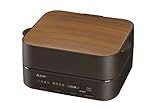
The Mitsubishi TO-ST1-T is not just a toaster; it is a cultural artifact born from this obsession. It is engineered to achieve a specific sensory goal: the perfect Texture Gradient. This is the sharp, dramatic contrast between a glass-like, shattering crust and a cloud-like, steaming interior.
This article explores the sensory science behind the machine. We will analyze the “5 Levels of Doneness” as chemical profiles, decode the algorithm behind the “French Toast” mode, and discuss the philosophy of “Single-Slice” dining as a form of mindfulness.
The Physics of Texture Contrast: Defining “Delicious”
Food scientists quantify texture using parameters like hardness, springiness, and cohesiveness. For toast, the “Golden Ratio” of deliciousness is maximum Contrast.
* The Crust: Needs to be dehydrated and brittle (Glass Transition). It should shatter upon impact (the bite).
* The Crumb: Needs to be fully hydrated and gelatinized. It should be elastic and soft.
* The Gradient: In a normal toaster, the transition from crust to crumb is gradual. The bread dries out progressively. In the Mitsubishi, the transition is abrupt. The sealed chamber keeps the crumb at nearly 100% hydration while the intense radiant heat cauterizes the surface. This creates a “step function” in texture—crunch, then cloud. This contrast is what the brain interprets as “premium.”
Decoding the 5 Levels: A Maillard Dial
The machine offers 5 levels of browning. These are not just timers; they are Temperature Integrals.
* Level 1 (Fluffy): Focuses on heating the core. The elements likely pulse gently to generate steam without triggering intense surface browning. It maximizes gelatinization.
* Level 5 (Crispy): A full assault. The elements stay on longer/hotter to push the surface temperature well past 320°F, driving the Maillard reaction to deep mahogany notes (furans and pyrazines).
* The Sensor’s Role: While user reviews debate whether it has sensors or is just a timer, a machine of this caliber likely monitors the rate of temperature rise. Dry bread heats faster than moist bread. The algorithm compensates, ensuring that Level 3 is always Level 3, whether the bread is fresh or day-old.
The French Toast Algorithm: Handling Sugar and Water
One of the standout features is the “French Toast” mode. Toasting French toast (egg/milk soaked bread) in a standard toaster is impossible (it drips/burns).
* The Sugar Challenge: French toast is rich in sugar and protein (egg). The Maillard reaction and Caramelization happen much faster and at lower temperatures for sugar-rich foods. A standard toasting cycle would turn French toast into charcoal on the outside while the egg inside remains raw.
* The Mitsubishi Solution: This mode likely uses a Low-Temp Steam-Bake profile. The elements pulse gently to heat the interior liquid (coagulating the egg custard) without spiking the surface temperature too early. It essentially poaches the bread in its own steam first, then applies a finishing radiant blast to brown the surface sugars. This mimics the “pan-fry then oven-finish” technique of professional chefs.

The Fixed Tray Dilemma: Hygiene vs. Thermal Coupling
A negative point in reviews is the non-removable crumb tray. “You have to clean it after every use,” notes user ‘team W’.
* Thermal Coupling: Why is it fixed? Because the tray is part of the Thermal Mass. A removable tray introduces an air gap, which acts as an insulator. To achieve the precise bottom heating required for the “Sealed Chamber” effect, the bread must sit on a surface that is thermally coupled to the chassis.
* The Cleaning Ritual: This forces the user to interact with the machine intimately. Wiping the tray becomes part of the ritual, reinforcing the value of the object. It is annoying, yes, but it is an engineering trade-off made in service of thermal performance.
The Philosophy of One: Shokupan Culture
Why only one slice? In Japan, Shokupan is often eaten as a thick slice (2-3 cm). It is a meal in itself.
* The Monotasking Kitchen: Western appliances prioritize throughput (4 slices! 8 hot dogs!). The Mitsubishi prioritizes Quality of Outcome. It asks the user to slow down.
* Freshness Optimization: Toast is best eaten within seconds of finishing. Toasting 4 slices means the last one is cold by the time you eat it. The single-slice design forces a “Just-in-Time” consumption model. You eat one perfect slice, then toast another. It aligns the machine’s cycle with the human eating pace.
Conclusion: The Architect of Morning
The Mitsubishi TO-ST1-T is an architect of texture. It constructs a sensory experience that standard toasters destroy. It uses steam as a structural element and radiant heat as a finishing tool.
For the user who views breakfast as fuel, it is a waste of money. But for the user who views toast as a medium for texture and flavor, it is a revelation. It proves that when you apply rigorous engineering and cultural philosophy to even the simplest task, the result is art.