Decoding IP7: The Engineering Behind Waterproof Electronics
In the world of consumer electronics, the word “waterproof” is both a powerful promise and a potential trap. It conjures images of worry-free use in the rain, during a sweaty workout, or even after an accidental drop into a puddle. But what does it really mean? The term itself is dangerously vague. To combat this ambiguity and provide a clear, universal benchmark, the industry relies on a rigorous international standard: the Ingress Protection Code, or IP Code.
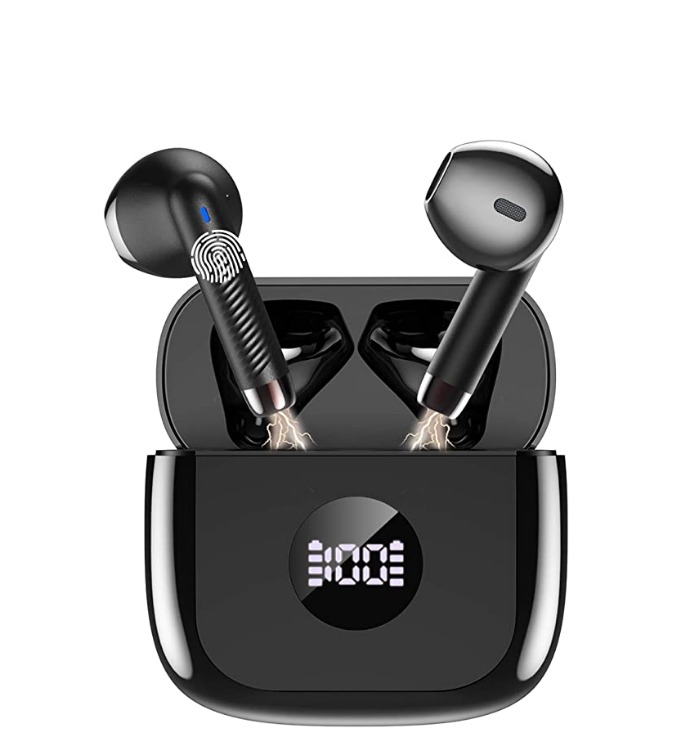
When you see a rating like IP7 on a device such as the Jxrev J53 wireless earbuds, you are not looking at a marketing slogan. You are looking at a certified technical achievement. This short code is packed with information about the device’s resilience against the intrusion of foreign objects, both solid and liquid. Let’s decode it, piece by piece, to understand the engineering fortress built inside these tiny gadgets.
Learning the Language: What the IP Code Really Says
The IP Code, formally known as IEC 60529, is a two-digit system. Each number represents a specific level of protection.
- The First Digit (Solid Particle Protection): This number ranges from 0 (no protection) to 6 (completely dust-tight). It tells you how well the enclosure protects against solids, from a curious finger down to microscopic dust particles. You will often see this replaced with an ‘X’ (as in IPX7), which simply means the device has not been officially rated for dust protection. For a sealed device rated for liquid immersion, dust protection is often inherently high, but the ‘X’ denotes the absence of a formal test.
-
The Second Digit (Liquid Ingress Protection): This is the number most people care about, ranging from 0 (no protection) to 9 (protection against high-pressure, high-temperature water jets). This digit quantifies the device’s ability to withstand water.
This standardized system replaces subjective terms like “water-resistant” or “water-repellent” with a precise, verifiable, and globally recognized rating.
The Gauntlet of IPX7: A Rigorous Underwater Exam
So, what does the ‘7’ in an IPX7 rating signify? It means the product has survived a very specific and controlled laboratory test. According to the IEC 60529 standard, to earn an IPX7 rating, the device must withstand being fully submerged in water under the following conditions:
- Depth: Up to 1 meter.
- Duration: For 30 minutes.
- Liquid: Fresh, still water.
After the 30-minute immersion, the device is removed, inspected, and must show no harmful ingress of water. This is not a casual splash test; it’s a trial by submersion. It’s a guarantee that a run in the rain or a drop in a sink won’t be a death sentence for your electronics.
The Engineer’s Fortress: Sealing a Leaky Room
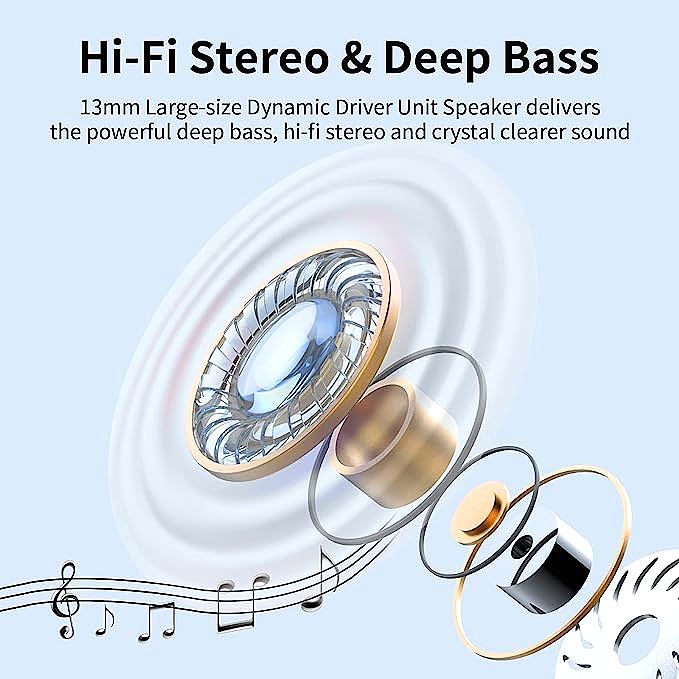
Achieving this level of protection in a device like an earbud is a formidable engineering challenge. Unlike a solid block of plastic, an earbud is inherently “leaky”—it has openings for the speaker to emit sound, for microphones to capture your voice, and seams where different parts of its casing join.
Engineers must act like fortress builders, sealing every potential point of entry. This is accomplished through a combination of strategies:
1. Precision Casings: The outer shells are molded with extremely tight tolerances, minimizing gaps.
2. Gaskets and O-Rings: Tiny, custom-shaped rubber or silicone gaskets are placed at the seams to create a watertight seal when the casing is snapped or screwed together.
3. Adhesives and Ultrasonic Welding: Special waterproof adhesives can be used to permanently bond seams, or high-frequency vibrations are used to melt and fuse the plastic parts together, creating a single, impenetrable shell.
The Final Line of Defense: An Invisible Nano-Raincoat
Even with a perfect seal, engineers often add another layer of protection for the most critical components inside: the circuit board. This is where a hydrophobic nano-coating comes into play.
Imagine spraying the electronics with a solution that, at a microscopic level, creates a spiky, textured surface. This is a simplified analogy, but the effect is similar to that of a lotus leaf. Due to the principles of surface tension, when a water droplet lands on this superhydrophobic surface, it cannot spread out and wet the electronics. Instead, it beads up into an almost perfect sphere and rolls right off, taking any contaminants with it. This nano-coating acts as the last-ditch defense, protecting the delicate circuitry in case the primary physical seals are ever compromised.
A Dose of Reality: The Gap Between the Lab and Life
It’s crucial for consumers to understand the limits of an IP rating. The IPX7 test is specific and does not account for many real-world conditions:
* Water Pressure: The rating does not cover high-pressure water jets, like from a showerhead or a faucet. Activities like swimming generate dynamic pressure that can exceed the 1-meter static test.
* Chemicals: The test uses fresh water. Saltwater from the ocean, chlorinated water from a pool, or soapy water in the shower can be corrosive and may degrade the seals over time.
* Temperature: The rating does not apply to hot water or steam, which can cause materials to expand and compromise the seals.
An IP7 rating is a powerful indicator of durability and quality engineering. It’s a standardized promise that your device is built to withstand the common accidents of daily life. By understanding what these numbers mean, you can move beyond vague marketing claims and make informed decisions based on a language of resilience that is spoken and respected by engineers worldwide.