
Decoding Value: The Science and Strategy Behind a Great, Affordable Coffee Pod
We live in an age of the coffee conundrum. We crave the rich, nuanced experience of a craft café brew, yet our mornings are dictated by the unforgiving tick of the clock. We desire quality, but our budgets demand value. This tension has fueled a revolution in how we consume our favorite beverage, crowning the single-serve coffee pod as the king of convenience. But this convenience often comes with a nagging question: are we sacrificing true quality for speed and price?
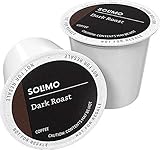
This brings us to our central mystery: a product like Amazon’s Solimo Dark Roast Coffee Pods. It boasts stellar user ratings, promises a premium experience with “100% Arabica” beans, yet is offered at a price point that seems to defy the conventional wisdom that “you get what you pay for.” Is it a clever marketing illusion, or have we stumbled upon a case study in modern value creation? In this investigation, we will act as detectives, dissecting this coffee pod layer by layer—from the bean’s DNA to the alchemy of the roast, and finally, to the massive economic engine that brings it to your kitchen—to decode how quality and affordability can, in fact, coexist.

The Blueprint of Flavor: What “100% Arabica” Truly Means
The journey of any coffee begins with the bean, and in the vast coffee kingdom, two species rule: Arabica and Robusta. Understanding the difference is the first step in becoming a savvy coffee consumer. Robusta, true to its name, is a hardy plant. It can grow in hotter climates, is more resistant to disease, and produces a higher yield. This makes it cheaper to cultivate. However, it comes with a flavor profile often described as “rubbery” or “earthy” and contains significantly more caffeine and less nuanced acidity. It’s the workhorse of the coffee world, often found in instant coffee and as a filler in less expensive blends.
Arabica, on the other hand, is the artist. It demands high altitudes, specific rainfall, and cooler temperatures, maturing slowly to develop a complex spectrum of flavors and aromas—notes of chocolate, fruit, nuts, and caramel. It accounts for over 60% of global coffee production for a reason: it yields a smoother, sweeter, and more aromatic cup.
When Solimo states “100% Arabica” on its box, it’s not just a marketing buzzword; it’s a foundational commitment to quality. It’s a declaration that they have sidestepped the most common cost-cutting measure in the coffee industry: blending in cheaper, harsher Robusta beans. This single choice is the primary defense against the bitterness and unpleasant aftertastes that plague many budget-friendly coffees. It is the blueprint for the “silky smooth” experience that users frequently report.

The Alchemy of Roasting: Mastering the “Dark Roast”
If the bean is the blueprint, the roast is the alchemy that brings it to life. Green coffee beans have little aroma and a grassy taste. It’s the carefully controlled application of heat that transforms them, triggering a cascade of chemical reactions. The most critical of these is the Maillard reaction—the same process that browns toast and sears a steak—where sugars and amino acids react to create hundreds of new aromatic compounds.
A “dark roast,” as the name implies, involves roasting the beans at higher temperatures for a longer duration. This process is a delicate balancing act. As the roast deepens, the beans’ inherent acidity mellows, and their oils migrate to the surface, creating a characteristic sheen. The sugars caramelize more intensely, breaking down the bean’s original floral or fruity notes and replacing them with deep, resonant flavors of dark chocolate, smoke, and a lingering bittersweetness. It’s also a common misconception that darker roasts pack more caffeine; in reality, the prolonged heat exposure slightly reduces the caffeine content per bean.
The danger of a dark roast is crossing the fine line from “bold” to “burnt.” An inexpert roast can obliterate all nuance, resulting in a one-dimensional, acrid, and bitter cup. This is where Solimo’s expertise is put to the test. The consistent praise from users, like Pamela Blynn’s review highlighting a “delicious, silky smooth cup of coffee with no bitter after taste,” serves as compelling evidence. It suggests a mastery of the roasting process, achieving the full-bodied punch expected of a dark roast while carefully preserving a smooth finish. It’s a testament to a process that values balance over raw power.
The Pod Paradox: Navigating Convenience and Conscience
So, we have a quality bean, expertly roasted. But sealing this potential into a tiny plastic cup introduces a new set of trade-offs—a paradox of modern convenience that every conscious coffee drinker must confront. The rise of the coffee pod was meteoric precisely because it solved genuine problems: it eliminated the guesswork of dosing and grinding, drastically cut down on prep and cleanup time, and delivered a remarkably consistent product with the press of a button. For millions with hectic lifestyles, it wasn’t just a new way to make coffee; it was the only way to fit a decent cup into their day.
However, this convenience carries a significant environmental cost. The proliferation of single-use plastic pods has created a massive waste stream, a fact that cannot be ignored in any honest discussion of this coffee format. While many K-Cup style pods, including Solimo’s, are now made from #5 polypropylene (PP), a more readily recyclable plastic, the responsibility often falls on the consumer to properly clean and sort them, a step that can undermine the very convenience they were purchased for. This is the central tension of the pod universe: a personal convenience that contributes to a collective problem. Acknowledging this doesn’t disqualify the product, but it does frame the choice to use it as a conscious one, where consumers might also consider alternatives like reusable K-Cup filters for their daily driver.
Case Study: Deconstructing the Solimo Value Proposition
Understanding this landscape of convenience and compromise sets the stage for our final investigation. How does a specific product like Solimo not only navigate this paradox but appear to triumph within it? Let’s put it under the microscope. The answer lies in a three-pronged strategy.
First, as we’ve established, is uncompromising quality at key checkpoints. By committing to 100% Arabica beans and a sophisticated dark roast profile, Solimo secures the foundation of its flavor. It’s a decision to invest in the elements that most directly impact the in-cup experience, refusing to cut corners where the consumer would most notice.
Second is the unseen power of the Amazon ecosystem. Solimo isn’t a plucky startup; it’s the house brand of one of the world’s most efficient retail and logistics machines. This provides enormous advantages. Massive purchasing power allows them to source high-quality Arabica beans at a lower cost per pound. A hyper-efficient, direct-to-consumer supply chain eliminates the markups from distributors and traditional retailers. This isn’t about making a cheaper product; it’s about building a more efficient path from the roaster to your coffee maker.
Finally, Solimo leverages social proof as a substitute for brand heritage. A new coffee brand faces a high barrier of trust. Solimo overcomes this by tapping into Amazon’s vast user review system. With over 146,000 ratings, the product’s quality and consistency are vouched for not by a marketing department, but by a community of peers. A review from “Energy Guy” stating these pods “taste as good as the best I found, and better than most, for a lot less money” is more persuasive than any advertisement. This creates a feedback loop where sales generate reviews, and reviews generate trust, driving more sales.
From Consumer to Connoisseur
The case of Solimo Dark Roast Coffee Pods is more than just a story about good, affordable coffee. It is a masterclass in modern value creation. It demonstrates how a company can achieve a competitive edge not by sacrificing the core components of quality, but by relentlessly optimizing every other part of the value chain and building trust through transparency and community feedback.
For us as consumers, this provides a powerful lesson. The next time you’re faced with a choice, look beyond the price tag and the brand name. Ask the right questions: What’s inside the pod? Is it 100% Arabica? How do users describe the roast profile? What systems are in place that allow for this price point? By learning to decode the product, you transform from a passive consumer into an informed connoisseur, capable of finding true value wherever it may lie.