The Physics of Light: Decoding the Genmitsu L8 Laser Architecture
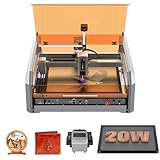
In the spectrum of electromagnetic radiation, visible light occupies a narrow band. Within that band, at approximately 455 nanometers, lies the deep blue frequency that powers the modern desktop revolution. The Genmitsu L8 Laser Engraver is a machine built around this specific wavelength. It is not just a tool for burning wood; it is a precision instrument that harnesses the photon density of diode arrays to vaporize matter.
Unlike the fragmented market of DIY kits, the L8 represents a trend towards Integrated Systems. It packages the laser source, motion control, safety enclosure, and environmental management (air assist/ventilation) into a single, cohesive unit. This article dissects the engineering behind the L8, exploring the physics of blue laser absorption, the fluid dynamics of air-assisted cutting, and the rigorous safety architecture that allows a Class 4 beam to operate safely in a Class 1 environment.
The Physics of Blue Light: Why 455nm Matters
To understand the capabilities of the L8, one must first understand its source energy. The machine uses Diode Laser Technology. Unlike CO2 lasers (which operate at 10,600nm in the far-infrared) or Fiber lasers (1064nm), the L8 emits visible blue light.
The Absorption Spectrum
The interaction between a laser and a material is governed by Absorption. If a material reflects the light (like a mirror) or transmits it (like a window), no energy is deposited, and no cutting occurs.
* Wood and Organics: Lignin and cellulose absorb 455nm light efficiently. The photon energy is converted to thermal energy, causing rapid pyrolysis (burning) and vaporization. This makes the L8 exceptional for plywood, leather, and paper.
* The Acrylic Paradox: One of the most common questions is, “Can it cut acrylic?” The answer lies in physics. Opaque acrylics (black, red, green) absorb blue light and cut beautifully. Clear or Blue transparent acrylics do not absorb this wavelength; the beam passes straight through. To cut clear acrylic, one needs the far-infrared wavelength of a CO2 laser, which clear plastic “sees” as opaque. This is a fundamental physical limitation of all diode lasers, not a flaw of the L8.
* Metals: Bare metals act as mirrors to visible light. However, the L8’s 20W or 40W Optical Power (achieved by combining multiple diodes) provides enough energy density to heat stainless steel to the point of oxidation. This allows for marking and engraving (annealing), but not cutting.
Spot Compression Technology
The “20W” or “40W” rating refers to optical output, but the cutting power is defined by Energy Density (Fluence).
Fluence = \frac{\text{Power}}{\text{Area}}
The Genmitsu L8 utilizes beam combining optics to compress the output of multiple diodes into a tiny focal point (typically 0.08mm x 0.08mm). This extreme concentration of photons increases the fluence dramatically, allowing the beam to penetrate thicker materials (like 15mm pine) that a diffuse beam of the same power would merely scorch.
The Aerodynamics of Cutting: Smart Air Assist
Laser cutting is a thermal process that generates smoke, char, and debris. If left uncontrolled, this byproduct interferes with the laser beam (attenuation) and stains the workpiece. The L8 integrates a Smart Air Assist Pump directly into the workflow.
The Fluid Dynamics of the Nozzle
The air assist nozzle is coaxial with the laser beam. It shoots a high-velocity jet of air directly into the kerf (the cut slot).
1. Oxidation Acceleration: When cutting wood, the air provides oxygen, promoting a cleaner burn and vaporizing the carbon more completely.
2. Debris Evacuation: The kinetic energy of the air stream physically blows the smoke and molten residue out of the cut. This clears the path for the laser beam, ensuring maximum energy delivery to the bottom of the material.
3. Thermal Regulation: The airflow cools the material immediately adjacent to the cut, reducing the Heat Affected Zone (HAZ). This results in cleaner edges with less charring.
By integrating this system (rather than requiring an aftermarket addition), the L8 ensures that every cut benefits from these aerodynamic principles.

The Workflow of Vision: Camera Integration
In traditional CNC, positioning is a matter of jogging the head to a specific point and setting a “zero.” The L8 disrupts this with Computer Vision.
The LightBurn Bridge
The built-in camera is not just for monitoring; it is a calibration tool compatible with LightBurn software.
* Parallax Correction: The wide-angle lens captures the entire bed. LightBurn’s algorithms correct the fisheye distortion, creating a flat, accurate map of the workspace.
* Overlay Workflow: This allows the user to drag their design directly onto the image of the material on the screen. It eliminates the need for jigs or precise measurements. If you have a scrap piece of wood with a weird shape, the camera lets you nest your design perfectly into the usable area. This integration of hardware (camera) and software (LightBurn) represents a leap in usability for the desktop fabricator.
Safety Engineering: Achieving Class 1 Certification
Lasers are dangerous. A Class 4 laser (like an open-frame diode) can cause instant blindness and skin burns. The Genmitsu L8 is certified as Class 1, meaning it is safe for use in a home environment without specialized protective gear (under normal operation).
The Enclosure Strategy
The machine is fully enclosed in a chassis that blocks laser radiation. The viewing window is made of specific acrylic that filters out the 455nm wavelength.
* The Interlock Loop: A sensor on the lid is wired into the controller’s safety circuit. If the lid is opened during operation, the circuit breaks, and the laser cuts power instantly. This hardware-level safety prevents accidental exposure.
* Active Flame Detection: The machine includes a flame sensor that monitors the workspace for infrared spikes indicative of a fire. If triggered, it halts the machine and sounds an alarm.
This “Safety by Design” approach transforms the laser from a hazardous workshop tool into a viable appliance for a classroom or office.

Conclusion
The Genmitsu L8 is a triumph of integration. By combining the raw physics of high-power diode arrays with the aerodynamic benefits of air assist and the safety of a Class 1 enclosure, it solves the fragmentation problem of the DIY laser market. It acknowledges that a laser is not just a beam of light; it is a system that requires management of smoke, heat, and radiation. For the creator, the L8 offers a platform where the physics are handled by the machine, leaving the mind free to focus on the design.