
The Chemistry of Durability: Anodized Aluminum and Hygienic Design
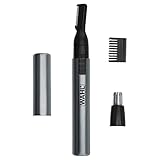
Personal grooming tools inhabit one of the most hostile environments in the home: the bathroom. They face high humidity, rapid temperature changes, exposure to water, and contact with acidic biological fluids (sebum, sweat). A tool that survives here must be chemically fortified.
The Wahl Micro Groomsman distinguishes itself with an Anodized Aluminum Body and Hygienic Steel Blades. This article explores the material science behind these choices, analyzing how electrochemistry creates durability and why the “rinseable” design is a matter of biological safety as much as convenience.
The Electrochemistry of Anodized Aluminum
Unlike cheap plastic trimmers that crack or painted metals that chip, the Wahl Micro Groomsman uses Anodized Aluminum.
* The Process: Anodizing is an electrochemical process. The aluminum body is submerged in an acid electrolyte bath and an electric current is passed through it. This oxidizes the surface of the metal.
* The Oxide Layer: This process converts the surface aluminum into Aluminum Oxide (Al₂O₃). This ceramic-like layer is integrated into the metal structure—it is not a coating that can peel off.
* Properties: Aluminum Oxide is incredibly hard (second only to diamond on the Mohs scale). It creates a scratch-resistant, corrosion-proof shield. In the damp environment of a bathroom, where untreated aluminum would oxidize into a white powder, the anodized shell remains inert.
* Tactile Thermodynamics: Aluminum has high thermal conductivity. It feels cool to the touch and quickly equilibrates to hand temperature. This gives the “pen-style” trimmer a premium, solid feel that plastic lacks, enhancing the user’s perception of control and precision.

The Physics of Rinsing: Hydrodynamics and Hygiene
The ability to rinse the blades is marketed as convenience, but scientifically, it is a hygiene necessity.
* The Biofilm Hazard: Grooming tools accumulate a mixture of keratin (hair), lipids (sebum), and skin cells. This mixture is a perfect growth medium for bacteria (like Staphylococcus) and fungi. On a dry brush, this debris is mechanically dislodged but often smeared.
* Hydrodynamic Shear: Rinsing the head under running water utilizes Fluid Shear Stress. The velocity of the water stream physically scours the microscopic crevices between the blades, flushing out the organic matter.
* Stainless Steel Passivation: The blades are Stainless Steel. The chromium in the steel reacts with oxygen to form a passive film of chromium oxide. This film regenerates if scratched. It makes the steel chemically inert to water, allowing for frequent rinsing without the risk of rust (oxidation) that would dull a carbon steel blade. This allows the user to maintain a “sterile” instrument for sensitive areas like the nose, preventing infection.

Energy Economics: The AAA Decision
In an age of lithium-ion rechargeables, the choice of a single AAA Alkaline Battery seems retro. However, from an engineering standpoint, it is a rational decision for this specific load profile.
* Low Drain, Intermittent Use: A detail trimmer is used for minutes at a time, perhaps once a week. It sits idle for long periods.
* Self-Discharge Rates: Rechargeable Li-ion batteries suffer from self-discharge. If you leave a rechargeable trimmer in a drawer for two months, you might find it dead when you need it. Alkaline batteries have an extremely low self-discharge rate (shelf life of 5-10 years).
* Instant Availability: For a travel tool, the ability to swap a dead power source instantly (by buying a battery at any store) outperforms the need to carry a dedicated charger and wait for a recharge. The AAA cell provides a reliable, energy-dense solution for a low-wattage motor, ensuring that the tool is always ready for duty.
Conclusion: The Science of Reliability
The Wahl Micro Groomsman is a study in appropriate engineering. It uses anodized aluminum not just for looks, but for chemical resistance. It uses stainless steel to enable hydraulic cleaning. It uses alkaline power for logistical reliability.
It represents a design philosophy where the materials are chosen to withstand the environment (the bathroom) and the power source is chosen to match the usage pattern (intermittent, travel). It elevates the humble nose trimmer from a disposable plastic gadget to a durable, hygienic instrument of personal care.