
The Architecture of Light: Smart Blinds and the Physics of Home Energy Efficiency
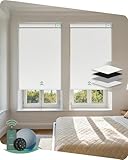
In the grand design of a home, windows are paradoxes. They are essential for mental well-being, connecting us to the outside world and bathing our interiors in natural light. Yet, thermodynamically, they are essentially holes in the wall. A single-pane window can lose heat ten times faster than the insulated wall surrounding it. In summer, they act as magnifying glasses, turning living rooms into greenhouses.
For centuries, the curtain was the low-tech solution to this high-tech problem. But manual curtains rely on human intervention—remembering to close them at noon, opening them at dawn. The Yoolax Motorized Blind represents the digitization of this ancient mechanism. By marrying textile engineering with the Zigbee communication protocol, it transforms a passive piece of fabric into an active component of the home’s thermal envelope.
This article deconstructs the physics of light and heat transfer, explores the “Protocol Wars” of smart home infrastructure, and analyzes why automating your windows is one of the most effective energy-saving strategies available today.
The Physics of Light and Heat: Passive Solar Strategies
To understand the value of a smart blind, we must first understand the enemy: Solar Gain. When sunlight strikes a window, it transmits energy in the form of visible light and infrared radiation.
* SHGC (Solar Heat Gain Coefficient): This measures how much solar radiation passes through the window.
* The Greenhouse Effect: Once inside, this short-wave radiation strikes furniture and floors, heating them up. These objects then re-radiate long-wave infrared heat, which cannot escape back through the glass. Heat is trapped.
The Role of the Barrier
A blackout shade, like the Yoolax polyester fabric, acts as a radiant barrier.
1. Reflection: The white backing (often used in high-quality blackout shades) reflects a significant portion of short-wave radiation back out the window before it converts to heat.
2. Absorption: The dense fabric absorbs the remaining energy, heating up itself rather than the room air.
3. Insulation: By creating a stagnant air layer between the glass and the shade, it adds a small but measurable R-Value (thermal resistance) to the window assembly.
Automating this process maximizes efficiency. A Yoolax blind set to close automatically at 10:00 AM (before the peak heat of the day) prevents the heat buildup in the first place. This is Passive Cooling, reducing the load on the air conditioning system significantly.
The Geometry of Light Leakage
However, physics is unforgiving. A common complaint with roller shades is “Light Gaps.”
* The Mechanical Gap: To allow the fabric to roll up without fraying against the brackets, the fabric width must be slightly narrower than the roller tube width. Yoolax specifies a gap of about 0.53 inches on each side.
* The Light Path: Light travels in straight lines, but it also scatters. Even a half-inch gap allows a blade of intense sunlight to cut through a darkened room.
* The Solution: This is not a defect but a geometric necessity of roller shades. To achieve true 100% blackout (for a home theater or nursery), one must install Side Tracks or Light Blockers—L-shaped strips that physically block this gap. Understanding this geometry helps manage expectations: the motor handles the heavy lifting, but the physics of the gap requires structural mitigation.

Protocol Wars: The Invisible Infrastructure
The “Smart” in smart blinds is defined by how they talk. Yoolax offers motors with two distinct languages: Bluetooth and Zigbee. Choosing the wrong one is the source of most consumer frustration.
Bluetooth: The Direct Line
Bluetooth is a point-to-point protocol. It connects your phone directly to the blind motor.
* Pros: Simple, low power, no extra hardware needed for basic app control.
* Cons: Limited range (about 30 feet). Crucially, Smart Speakers (Alexa/Google) do not speak Bluetooth directly to appliances. To control a Bluetooth blind with voice, you need a “Translator”—a Bridge or Hub (like the Yoolax Hub) that connects to Wi-Fi and blasts Bluetooth commands.
Zigbee: The Mesh Network
Zigbee is a low-power, mesh networking protocol designed specifically for home automation.
* The Mesh: Each Zigbee device (if plugged in) acts as a repeater, strengthening the network. Battery devices (like blinds) are end-points.
* The Integration: Yoolax’s Zigbee motor (Z425) is a game-changer for Echo owners. Why? Because devices like the Echo Show 10, Echo Studio, and Echo 4th Gen have a Zigbee Hub built-in.
* The “Direct Connect” Magic: If you have one of these Echos, the blind talks directly to the speaker. No extra dongles, no third-party apps, no cloud-to-cloud latency. It is a local, robust connection. This is the “Holy Grail” of smart home setup—seamless interoperability.
However, if you have an Echo Dot (which lacks a Zigbee hub), you fall back into the “Hub Trap,” needing to buy a separate Zigbee bridge. Understanding your existing hardware ecosystem is prerequisite to purchasing the right motor.

The Aesthetics of Automation: Cordless by Design
Beyond physics and protocols, there is the dimension of design. The defining feature of a motorized blind is what it lacks: the chain.
The Safety Imperative
For decades, the loop of a blind cord was a known strangulation hazard for young children and pets. The CPSC (Consumer Product Safety Commission) has long advocated for cordless designs.
Motorization is the ultimate cordless solution. It removes the hazard entirely, replacing manual torque with an electric motor. This makes the Yoolax blind not just a tech gadget, but a Safety Device for families.
Visual Minimalism
Aesthetically, the absence of a dangling plastic chain cleans up the lines of the window. It creates a modern, architectural look. The “Valance” (the cover at the top) hides the roller mechanism, further streamlining the appearance. In contemporary interior design, where “visual clutter” is the enemy, the motorized shade is a key element of the minimalist toolkit.
Powering the Machine: Solar vs. Battery
The Yoolax motors are battery-powered, typically lasting 3-6 months on a charge. However, the true “set and forget” experience comes with the addition of a Solar Panel.
* Photovoltaic Trickle Charging: By mounting a small solar strip behind the blind (facing the glass), the battery receives a constant trickle charge. Even indirect light can extend the battery life significantly.
* Energy Independence: This creates a self-sustaining system. The sun that tries to heat your room also powers the shield that blocks it. It is a poetic loop of energy efficiency.
Conclusion: The Sentient Home
The Yoolax Motorized Blind is more than a lazy way to avoid pulling a cord. It is a component of the Sentient Home.
When connected to a smart ecosystem, it reacts to the environment. It closes when the sun is hot to save AC. It opens when the alarm goes off to wake you up. It seals the house at sunset for privacy.
By decoding the physics of solar gain and navigating the Zigbee/Bluetooth landscape, homeowners can deploy these devices to create a living space that is not just smarter, but thermally efficient, aesthetically pure, and responsive to the rhythms of the day.