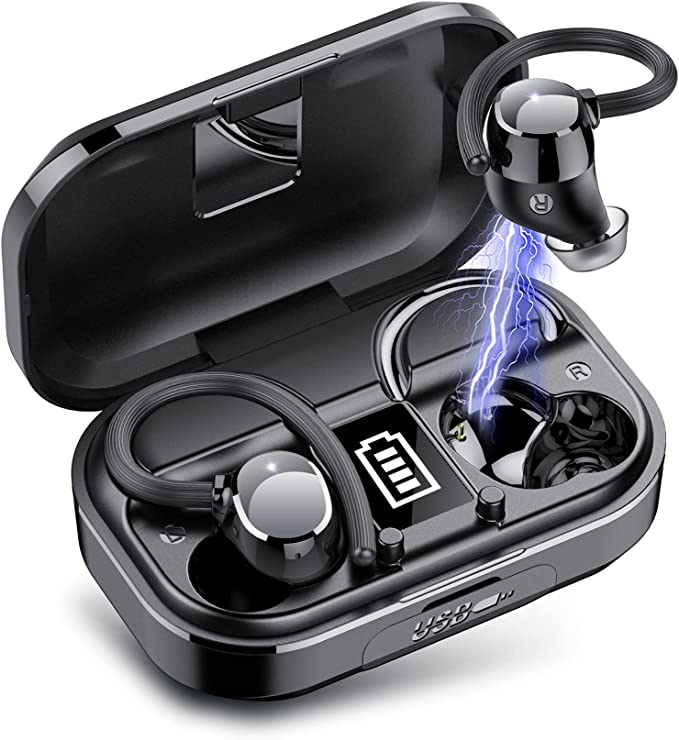
Kinetic Acoustics: How Earhooks and 13.4mm Drivers Solve the Runner’s Dilemma
Running is a violent act for audio gear. The vertical oscillation of each stride creates a “pumping” force that tries to dislodge earbuds, breaking the acoustic seal. Once the seal is broken, bass frequencies vanish instantly. The VOESUD Q53 addresses this kinetic problem through a symbiotic relationship between its Mechanical Architecture (Earhooks) and its Acoustic Engine (13.4mm Drivers).
This analysis explores why this combination is not just a design choice, but a physics necessity for high-impact sports audio.
The Physics of the “Pump”: Why Fit Equals Sound
In standard in-ear buds, the silicone tip performs two jobs: retention (holding the bud in) and sealing (trapping bass pressure). Sweat and movement compromise both.
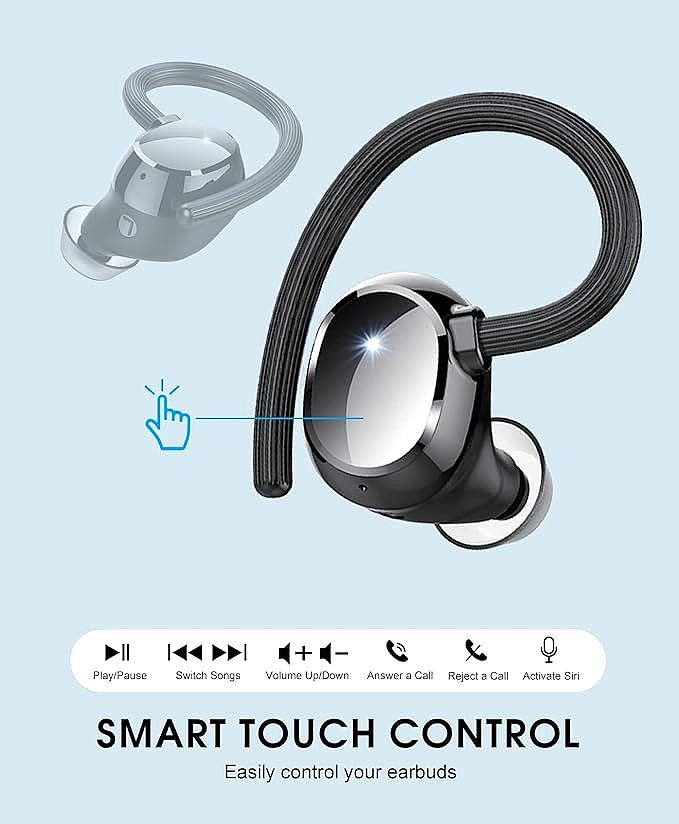
* The Earhook Solution: The Q53’s flexible earhooks offload the retention job to the outer ear structure (the pinna). This mechanical anchoring ensures that the earbud nozzle remains perfectly aligned with the ear canal, even during burpees or sprints.
* Seal Consistency: Because the hook prevents the bud from bouncing, the acoustic seal remains unbroken. This consistency is critical for maintaining the “Pressurization Chamber” effect needed for deep bass.
13.4mm Drivers: Compensating for Open Space
Even with a good seal, sports headphones often allow some air leakage for safety (situational awareness). To counter this, VOESUD employs massive 13.4mm Composite Diaphragms.
* Air Displacement: A 13.4mm driver has significantly more surface area than the standard 6mm-8mm drivers found in compact buds. It can move a larger volume of air with less excursion.
* Bass Authority: This displacement capability allows the Q53 to produce “40% more bass” (as claimed) physically, rather than relying on digital EQ boosting which can introduce distortion. The large driver acts as a “torque-heavy engine,” delivering punchy low-end that cuts through the noise of heavy breathing and footfalls.
Bluetooth 5.3: The Invisible Anchor
Supporting this acoustic system is the Bluetooth 5.3 chipset. In sports, the body itself is a blocker of RF signals (water absorbs 2.4GHz waves).
* Signal Robustness: BT 5.3 improves signal stability in challenging environments (like a phone strapped to the lower back or in a crowded gym).
* Latency: The “3x faster transmission speed” ensures that the motivating beat stays perfectly synced, eliminating the disorienting lag that can disrupt a runner’s cadence.
Conclusion: Equipment for Motion
The VOESUD Q53 is engineered with the understanding that a moving body is a hostile environment for audio. By mechanically securing the device with earhooks and acoustically overpowering the environment with 13.4mm drivers, it ensures that the music—and the motivation—never drops out, no matter how hard you train.