
The Unseen Janitor in Your Water: How Visible-Light Photocatalysis is Redefining Clean
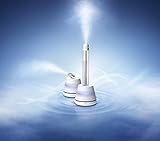
We trust the water that comes from our taps. Filtered, treated, and deemed safe by authorities, it’s a cornerstone of modern life. But once that water sits—in a glass, a pet’s bowl, or the reservoir of a home appliance like a humidifier—a microscopic drama begins to unfold. Airborne bacteria and spores find a new home, and the stagnant water slowly transforms into a microbial incubator. The conventional solution has always been reactive: frequent, tedious cleaning. But what if the water could clean itself? What if a silent, unseen janitor worked around the clock to ensure purity at the molecular level?
This isn’t science fiction; it’s the reality of an advanced technology known as photocatalysis, and a recent breakthrough is allowing it to move out of industrial facilities and into our homes. Specifically, we’re talking about visible-light photocatalytic water purification, a process that uses ordinary light to turn a passive surface into an active, self-sterilizing environment.

The Alchemy of Light: How Photocatalysis Works
At its heart, photocatalysis is a light-driven chemical reaction. The star of the show is a semiconductor catalyst, most commonly titanium dioxide (TiO₂). TiO₂ is a stable, non-toxic, and inexpensive material, but when light strikes it, it becomes a powerful oxidizing agent.
Here’s the breakdown:
1. Activation: A particle of light, a photon, hits the TiO₂ surface. If the photon has enough energy—more than the material’s “band gap”—it excites an electron (e⁻), knocking it out of its stable position. This leaves behind a positively charged “hole” (h⁺).
2. Generating Radical Janitors: These electron-hole pairs are incredibly unstable and reactive. They immediately interact with water molecules (H₂O) and oxygen (O₂) on the catalyst’s surface. This interaction generates a swarm of highly potent Reactive Oxygen Species (ROS), most notably hydroxyl radicals (·OH).
The hydroxyl radical is the true workhorse of this process. With an oxidative potential of 2.8V, it is one of the most powerful oxidizing agents known to science, far stronger than common disinfectants like ozone (2.07V) or chlorine (1.36V). These radicals are indiscriminate destroyers. They attack the cell walls of bacteria, shred the protein shells of viruses, and break down organic pollutants into their simplest, harmless components: water and carbon dioxide. It’s a microscopic cleansing fire, powered by light.
The UV Barrier and the Visible-Light Breakthrough
For decades, this powerful technology had a major limitation: its light source. Standard TiO₂ (in its anatase form) has a wide band gap of about 3.2 electron-volts (eV). To overcome this gap and kickstart the reaction, it requires high-energy ultraviolet (UV) light, typically with a wavelength under 387 nanometers.
While effective, using UV light in consumer products is problematic. UV lamps degrade plastics, have a limited lifespan (around 5,000 hours), and raise safety concerns. This “UV barrier” has largely confined photocatalysis to industrial applications.
The true innovation—the key that unlocks this technology for home use—is the development of visible-light-responsive photocatalysts. Companies like Kaltech have pioneered a materials science solution, engineering a new crystal structure of TiO₂. Through proprietary modifications, they’ve lowered the catalyst’s band gap energy. This crucial change allows the photocatalytic process to be driven by lower-energy, completely safe visible light, specifically blue-violet light in the 405nm range.
This is more than a simple component swap. It’s a fundamental shift. Instead of a high-maintenance, potentially hazardous UV lamp, a simple, long-lasting (40,000+ hours) LED can now power the reaction. This makes the system safer, more durable, and more reliable for a domestic setting.
Case Study: A Self-Cleaning Humidifier Reservoir
To see this technology in action, consider the Kaltech KL-H01U humidifier. It directly tackles the “humidifier’s paradox”—where the device meant to improve your air becomes a breeding ground for germs. Its water reservoir isn’t just a plastic tub; the entire inner surface is coated with their visible-light-responsive TiO₂ catalyst.
A 405nm blue-violet LED continuously illuminates the water in the tray. This isn’t just for aesthetics; it’s the engine of the purification system. The light activates the catalyst, constantly generating hydroxyl radicals at the water-surface interface. Any bacteria that land in the water are swiftly neutralized.
This “active defense” system is why the unit consumes a small amount of power (around 5W) even in standby. It’s maintaining a constant state of sanitation. The company’s data, showing a 91% reduction in bacteria compared to tap water standards after 14 days of use, provides a quantitative look at the effectiveness of this unseen janitor. It’s a system designed not to need daily water changes because the water is, in effect, constantly being cleaned.

The Future is Self-Purifying
The shift from UV to visible light activation is a watershed moment for photocatalytic technology. While our case study is a humidifier, the potential applications are vast. Imagine self-sterilizing water bottles, continuously purifying pet bowls, or safer medical equipment.
By harnessing a specific wavelength of harmless light, this technology provides a persistent, chemical-free, and low-maintenance solution to the age-old problem of microbial contamination in water. It represents a move from reactive cleaning to proactive, built-in purity, fundamentally changing our definition of “clean.”