The Sound of Safety: Why the Future of Listening Isn’t About Blocking the World Out, But Letting It In

See if this looks familiar. A runner navigates a city park at dawn, one earbud in, the other dangling uselessly, her head on a constant swivel. A cyclist weaves through traffic, music pulsing from a single side, trying to balance a podcast with the sound of a car in their blind spot. A parent works from home, a conference call in one ear while the other strains to hear the baby stirring in the next room. This is the one-earbud compromise, a silent epidemic in our cities and homes. It’s a makeshift solution to a problem created by a technology culture obsessed with a single metric: total, absolute immersion.

For the past decade, the holy grail of personal audio has been noise cancellation. We’ve celebrated headphones that can build a fortress of silence around us, erasing the drone of a plane, the chatter of an office, or the rumble of a subway. And in the right context, this immersion is a gift. But in our daily lives, that fortress can easily become a prison. Every time we seal ourselves off from the world, we pay a price in situational awareness. That “perfect seal” that blocks out the coffee shop’s music also blocks out the screech of tires, the shout of a warning, or the approaching footsteps behind us on a dark path.
The cost of this sensory isolation is real. For athletes on the road, it’s a direct safety hazard. For parents and caregivers, it creates a constant, low-level anxiety of missing a crucial sound. For pedestrians, it contributes to a disconnected, “zombie-like” state that makes our shared urban spaces more dangerous for everyone. We’ve been so focused on creating the perfect personal soundtrack that we’ve forgotten we’re all still members of the same orchestra—the unpredictable, messy, and vital orchestra of the world around us.
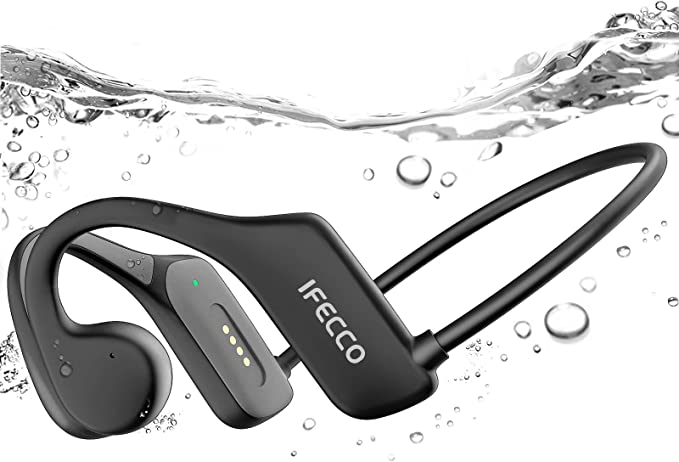
But what if there was a third way? A way to have your personal audio without sacrificing your connection to reality? This is the promise of open-ear listening, a technology that feels less like an invention and more like a rediscovery of how we’re meant to interact with our environment. Technologies like bone conduction, used in devices such as the IFECCO X5, offer a fundamentally different paradigm. Instead of plugging or covering your ears, they send sound vibrations through your cheekbones directly to your inner ear. The mechanism is fascinating, but the experience is what truly matters: your ears remain completely, totally open.
What does this feel like? It feels like regaining a superpower you didn’t know you’d lost.
For the runner at dawn, it sounds like safety. She can feel the bass of her running playlist while clearly hearing the whir of a bicycle approaching from behind. Her focus shifts from anxiety back to her form and her breathing.
For the parent working from home, it sounds like peace of mind. The voices on the Zoom call are clear, but so is the sound of their toddler waking up from a nap, not as a muffled disturbance, but as a clear, distinct signal. The one-earbud juggle is over.
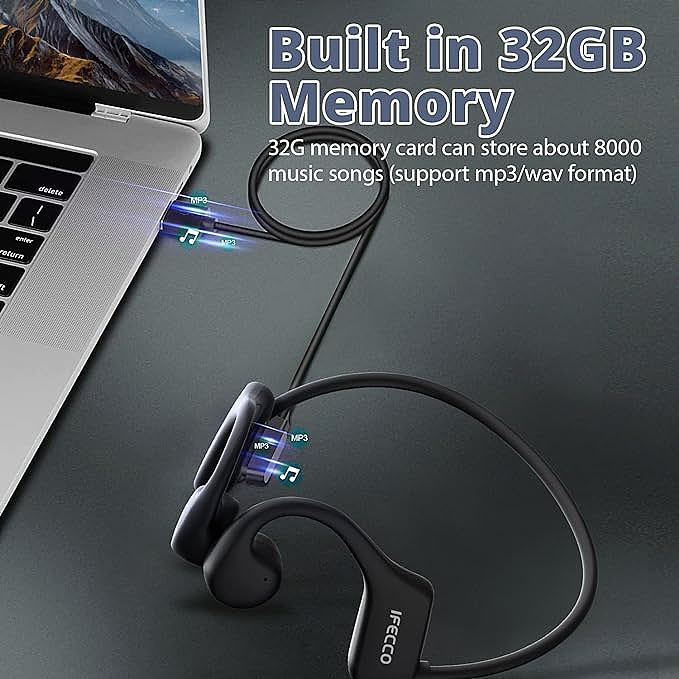
For the cyclist commuting to work, it sounds like confidence. They can follow their GPS navigation prompts without being deaf to the symphony of the city—the car horns, the pedestrian chatter, the specific sounds that signal the flow and danger of traffic.
This isn’t about compromising your audio experience; it’s about enhancing your life experience. It’s the difference between moving through the world and being in the world. This technology allows our brains to do what they do best: process multiple streams of information, prioritize what’s important, and keep us safe and connected.
Ultimately, this represents a shift in our relationship with technology. It’s a move toward a philosophy of presence. For too long, we’ve accepted a false choice: either be present in the digital world or be present in the physical one. Open-ear listening suggests we can do both. We can have our podcasts and our situational awareness. We can have our music and our connection to the people and places around us. The future of listening may not be about creating a more perfect bubble to escape into, but about finding smarter, safer, and more human ways to let the world in.