The Digital Gatekeeper and the Iron Bolt: A Unified Framework for Smart Lock Security
We live in an age of digital anxiety. When considering a smart lock, our fears gravitate towards the invisible threats: a sophisticated hacker exploiting a software flaw, a stolen password, or a vulnerable cloud server. We invest hours researching encryption standards and app permissions, yet we rarely ask a far simpler, more primal question: can the lock withstand a solid kick? This paradox reveals a dangerous blind spot in how we assess home security. We are so focused on the “smart” digital gatekeeper that we’ve forgotten the importance of the simple, sturdy iron bolt.
A truly secure smart lock is not just a clever piece of code; it is a synthesis of robust physical engineering and resilient digital architecture. To evaluate one without the other is to see only half the picture. The reality is, the most common methods of forced entry are brutally physical, not elegantly technical. According to FBI data, the majority of burglaries involving forced entry rely on sheer kinetic energy—kicking in a door or prying open a frame. Therefore, a comprehensive security assessment requires a unified framework, one that gives equal weight to both the bits and the bolts.

Layer One: The Physical Foundation – Resisting Force and Finesse
Before any digital handshake occurs, a lock is a physical object. Its ability to resist two primary forms of physical attack—brute force and technical manipulation—forms the bedrock of your security.
1. Resisting Brute Force: The ANSI/BHMA Grade
The most straightforward measure of a lock’s physical strength is its ANSI/BHMA (American National Standards Institute / Builders Hardware Manufacturers Association) grade. Locks are tested against a battery of stress tests, including bolt strength, impact resistance, and cycle testing, and are awarded one of three grades:
- Grade 1: The highest commercial and residential security rating. It must withstand 10 strikes with a sledgehammer and has a 1-inch long deadbolt.
- Grade 2: A mid-range security level, suitable for most residential uses.
- Grade 3: The lowest grade, offering basic security and typically not recommended for primary external doors.
When evaluating any smart lock, your first question should be: what is its ANSI/BHMA grade? A Grade 1 or Grade 2 rating indicates that the underlying mechanical hardware has been independently certified to withstand significant physical punishment. This single data point is often more telling about your security than any marketing claim about “military-grade” encryption.
2. Resisting Technical Manipulation: The Lock Cylinder
Beyond brute force lies the subtle art of lock manipulation. Techniques like lock picking and, more alarmingly, “lock bumping” can allow an intruder to open a traditional pin-tumbler lock in seconds with a specially cut key and a sharp rap. This is where modern cylinder technology becomes critical.
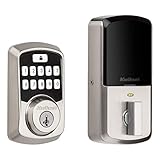
Kwikset’s SmartKey Security is a prime example of a design engineered to counter these threats. Instead of traditional pins and tumblers, it uses a sidebar and wafer system. This design is not susceptible to lock bumping. When a bump key is inserted and struck, there are no top pins to jump and create a shear line. For lock picking, the tolerances are tighter and the feedback mechanism is different, making it more challenging for all but the most skilled pickers. While no lock is truly “unpickable,” technologies like this raise the skill, time, and tool requirements for a successful attack exponentially, moving it out of the realm of the opportunistic burglar.
It’s crucial to understand that this physical layer is your last line of defense. If an attacker can bypass the cylinder or simply destroy the lock body, the smart features become irrelevant.
Layer Two: The Digital Citadel – Firmware, Access, and Audits
Once the physical foundation is confirmed to be sound, we can turn our attention to the lock’s intelligence. The digital risks are more complex but can be managed by focusing on three key areas.
1. Firmware Integrity and Updatability
A smart lock’s firmware is its embedded operating system. Vulnerabilities discovered in this code could potentially allow an attacker to bypass authentication. The single most important digital security feature is, therefore, the manufacturer’s ability to deliver secure, over-the-air (OTA) firmware updates. Before purchasing any smart device, ask:
- Does the manufacturer have a clear history of providing security patches?
- Is the update process automatic and seamless, or does it require manual intervention?
A lock that cannot be updated is a ticking time bomb, a static target for future exploits. A lock with a robust update mechanism is a living defense, capable of evolving to meet new threats.
2. Granular Access Control
The “smart” part of a smart lock offers a security advantage that physical keys can never match: granular control. The ability to issue temporary digital keys or keypad codes—for a dog walker, a contractor, or a house guest—and then revoke them instantly is a massive security upgrade over a physical key that, once copied, is permanently in the wild.
When evaluating a lock’s app, look for the flexibility of its access management. Can you set codes that work only on specific days and times? Can you issue one-time-use codes? Devices like the Kwikset Aura, through their app, allow for this level of detailed scheduling. This capability transforms access from a binary “yes/no” state to a nuanced, time-sensitive privilege, drastically reducing long-term risk.
3. The Audit Trail
A critical, yet often underappreciated, feature is the activity log. Knowing who unlocked the door and when provides an invaluable audit trail. In the event of a security incident, this log can be the key to understanding what happened. It also acts as a deterrent. The knowledge that their entry is being digitally timestamped can discourage unauthorized use by those with legitimate access.

Conclusion: A Holistic Security Posture
A secure home is not achieved by choosing the lock with the most features or the strongest encryption. It is achieved by adopting a holistic security posture. Start by demanding a strong physical foundation—a certified ANSI/BHMA grade and a cylinder resistant to manipulation. Then, build upon that foundation with smart, resilient digital practices—insist on updatable firmware, utilize granular access controls, and monitor your activity logs.
The Kwikset Aura, with its Grade 2 deadbolt and SmartKey cylinder, provides a solid physical base. Its Bluetooth connectivity and app-based management then add the layers of digital control. But the specific product is less important than the principle: we must stop treating physical and digital security as separate domains. The true strength of a smart lock lies in the seamless integration of the iron bolt and the digital gatekeeper, working in concert to protect your home.