
The Physics of Flight: A Scientific Breakdown of Key BMX Techniques
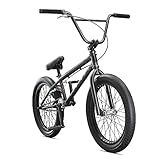
We often see a BMX rider and their bike as two separate entities. But to achieve flight, they must function as one integrated system. The rider is the engine and the brain, providing power and control. The bike is a complex machine of levers and pivots, translating the rider’s inputs into motion. Great riding isn’t just about strength or courage; it’s about an intuitive understanding of physics. This guide will make that intuition conscious. By deconstructing the science behind foundational BMX techniques, we can move from simply trying harder to training smarter.

Case Study 1: The Bunnyhop – Defying Gravity
The bunnyhop is the most fundamental skill in freestyle BMX, the gateway to everything else. At its core, it is a lesson in leverage and explosive energy transfer.
The Bio-mechanics: A Two-Part Explosion
A high bunnyhop is not a single motion, but a rapid, coordinated sequence of muscle contractions.
1. The “Pull”: The rider pre-loads by compressing their body, then explodes upwards, pulling the handlebars towards their waist. This is a powerful hip-hinge movement, engaging the glutes and hamstrings, combined with a strong pull from the lats and biceps. The rider’s body becomes a spring, uncoiling vertically.
2. The “Push”: As the front wheel rises, the rider shifts their center of mass forward and pushes the handlebars forward and away from their body, while simultaneously scooping the pedals with their feet. This “push” levers the rear wheel off the ground.
The Physics: A System of Levers
The bike acts as a Class 1 lever. In the “pull” phase, the rear wheel is the fulcrum, the rider’s pull on the bars is the effort, and the weight of the bike’s front end is the load. The real genius, however, is in the “push” phase. As the rider extends their arms and pushes the bike forward, their body acts as a counterweight. This action, combined with the upward momentum from the initial pull, allows the entire bike to become airborne. The efficiency of this energy transfer is paramount. A stiff, full chromoly frame, like that on the L100, minimizes energy loss to frame flex, ensuring that nearly all of the rider’s explosive effort is converted into upward motion.
Case Study 2: The Manual – The Art of Balance
If the bunnyhop is an act of explosive power, the manual is its polar opposite: an act of sustained, delicate grace. It is a rolling wheelie, performed without pedaling. It is a study in dynamic equilibrium.
The Bio-mechanics: Constant Micro-Adjustments
A rider in a manual is not static. They are in a constant state of minute adjustment, primarily by moving their hips forward and backward.
* Feeling “Looped Out” (falling backward): The rider subtly moves their hips forward, shifting their center of mass forward and bringing the front wheel down.
* Front Wheel Dropping: The rider moves their hips backward, shifting their center of mass back and lifting the front wheel.
This is controlled by the core muscles and a sensitive connection to the bike through the feet and hands.
The Physics: The Balance Point
The rider is balancing the bike’s “center of mass” directly over the rear axle. The rear axle is the pivot point. Gravity is constantly trying to create a torque that will either drop the front wheel or loop the rider out. The rider counteracts this by shifting their own body weight, creating an opposing torque to maintain equilibrium. The bike’s geometry plays a huge role here. A shorter chainstay brings the rear wheel further under the rider, making it easier to get into the manual and making the balance point feel more responsive. A longer chainstay creates a larger, more stable balance point, but requires more effort to initiate.

Conclusion: Knowledge is Power (and Pop)
Understanding the science behind these techniques doesn’t remove their magic; it deepens our appreciation for them. It explains why the coach’s advice to “push the bars forward” in a bunnyhop actually works. It clarifies why shifting your hips is the key to a long manual. This knowledge transforms mindless repetition into mindful practice. It allows you to analyze your own movements, diagnose problems, and make more effective corrections. By understanding the ‘why,’ you can perfect the ‘how.’ The bike is your laboratory, and physics is your guide.