Taming the Blast: An Engineer’s Field Guide to the Flavour Blaster Mini 2
The marketing is slick. A perfectly formed, aromatic bubble appears as if from nowhere, delighting guests and elevating a simple drink into a multi-sensory event. The magic is impressive, but as with any specialized tool—from a chef’s knife to a barista’s espresso machine—success lies not in the magic, but in the mechanics.
To get consistent, repeatable results from the Flavour Blaster Mini 2, one must approach it not as a toy, but as a piece of equipment. It has tolerances, limitations, and a series of undocumented quirks that separate a beautiful outcome from a frustrating, slimy mess. This is not a magic wand. This is a system that demands to be understood. So, let’s look under the hood and create the user manual that should have come in the box.

Unboxing the System: A Bill of Materials
Before the first bubble, a critical assessment of the hardware is in order.
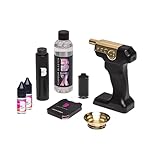
- The Gun: The main unit is lightweight, constructed primarily of plastic, which is suitable for home use but may raise durability questions for a professional. The ergonomics are straightforward. Its most clever feature is the magnetic tank system, allowing for quick swaps of aroma cartridges.
- The Consumables: The kit includes the core consumables: the Bubble X liquid (the surfactant solution) and at least one aroma. Crucially, the Mini 2 kit often ships with a disposable tank. This is a key distinction from the professional Pro model. It’s a sealed unit designed for one aroma flavor and has a finite lifespan, representing a recurring cost and a potential point of failure.
- The Missing Pieces: Immediately, two items are conspicuous by their absence. First, there is no charging brick. You get a USB-C cable, but the power adapter is on you. This is a common cost-cutting trend, but for a premium-priced device, it feels like an oversight. Second, a dedicated stand for the unit is not included, meaning you need to find a safe place to lay it down between uses.
Pre-Flight Checklist: Your First Five Minutes
While you can achieve some results by simply pointing and shooting, consistent, professional-level results require a deeper understanding. This guide is for those who prefer to be craftsmen, not just hobbyists.
Charging Protocol
Use a standard 5V/1A USB charging brick. Avoid high-wattage “fast chargers” for other devices, as they may stress the battery over time. A full charge takes several hours, so plan accordingly. The side lights will indicate the charging status.
Tank Installation
The disposable tank is simple: remove the silicone plugs, let the internal coil prime with liquid for a minute or two, and then snap it into place magnetically. The connection is satisfying and secure.
The Real Power Switch
This is the single most critical piece of non-obvious information.
* To Power ON: Press the trigger twice, quickly. Click-click. The side lights will illuminate.
* To Power OFF: This is a two-step process. First, physically remove the magnetic tank. Then, press the trigger twice quickly and hold it down on the second press (Click-hold) until the side lights turn off completely. Simply setting the device down does not turn it off, and you will drain the battery.
Setup is complete. The indicator light is on. Now comes the moment of truth: creating a stable, beautiful bubble. This is where the physics of your drink and the finesse of your technique collide.
In-Flight Operations: Mastering the Bubble
Think of this section as your troubleshooting guide, written before the trouble starts.
The Laws of the Bubble
A bubble is a fragile structure. Respect its enemies. The following conditions, based on user reports and basic physics, are bubble-killers:
* Sharp Edges: Rounded or rolled-rim glassware is your friend. A sharp, thin rim is like a knife to the bubble’s skin.
* Icebergs: An ice cube protruding above the liquid’s surface is a guaranteed bursting point. Ensure 2-3cm of clearance.
* High ABV & Carbonation: High-proof spirits and aggressive carbonation can disrupt the surface tension the bubble relies on.
* Temperature: The ideal operating environment is a cool room (around 18°C / 65°F). In a hot, humid environment, your bubble’s lifespan will be dramatically shorter.
Managing the Artifact: The Surfactant Film
Let’s be direct. When the bubble pops, the liquid it was made from—the Bubble X solution—remains. This surfactant film is a physical residue. One user aptly called it a “slimy residue.” While a single bubble is fine, if you have three failed attempts, you will have three layers of this film on your drink. This will negatively impact the texture and visual appeal.
The professional’s approach is the “one-shot” rule. Prepare your drink, prepare your technique, and aim to land one perfect bubble. If it fails, consider serving the drink as-is rather than marring its surface with repeated attempts.
You’ve wowed your guests and the last bubble has popped. The job isn’t over. Like any precision instrument, the long-term performance of the Flavour Blaster depends on what you do after the show is over.
Post-Flight Maintenance: Cleaning and Long-Term Care
Cleaning the Nozzle
After a session, aroma liquid can crystallize or clog the nozzle. Gently wipe the exterior of the nozzle with a damp cloth. Do not immerse the device in water. For the Pro model with reusable tanks, a more thorough cleaning is possible, but for the Mini, keeping the nozzle tip clean is the main priority.
The Economics of Operation
This is not a one-time purchase. To understand the true cost of ownership, consider:
* Price of Bubble X refills: How much per 180ml bottle?
* Price of aroma refills/disposable tanks: How much per flavor?
* Your usage: Will you make 10 bubbles a month or 100?
Calculate your own “cost-per-bubble.” This simple exercise will tell you if the device fits your budget and lifestyle.

Conclusion: A Tool for the Patient Artisan, Not the Impatient Magician
The Flavour Blaster Mini 2 is a fascinating and capable device. It successfully brings a professional-level effect into the home bar. However, it is not an appliance; it is an instrument. It demands practice, an understanding of its limitations, and a respect for the sensitive physics at play.
It is a tool that rewards the patient artisan—the user who takes the time to learn the correct power-down sequence, who understands why their bubble is popping, and who knows when to stop trying. For that person, it unlocks a new realm of creative expression. For the impatient magician seeking a foolproof trick, it is likely to become a source of frustration and a novelty that quickly gathers dust. Tame the blast, and it will serve you well.