
The Key to a Legacy: Unpacking the History and Science in a Can of Cuban Coffee
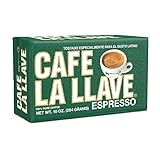
It begins with a sound. A sharp, satisfying hiss as the vacuum seal on the brick-like package is broken, releasing a dense, aromatic cloud that speaks not just of coffee, but of something deeper. It’s a potent promise of dark chocolate, of toasted nuts, and of a comforting, familiar bitterness. This is the scent of tradition, a sensory portal to bustling family kitchens and sun-drenched Miami afternoons. This is Cafe La Llave. But the name, “La Llave,” Spanish for “The Key,” is more than just a brand. It’s an invitation, a challenge to look beyond the surface. This article is about using that key to unlock two doors simultaneously: one leading into the century-spanning journey of a coffee family, from the fertile hills of Cuba to the heart of Los Angeles; the other opening into the microscopic, fiery world of chemistry, where the very soul of its dark-roasted flavor is forged.

The Gaviña Family’s Key: From Cuban Hills to a Californian Dream
Long before the first can was sealed, the story of Cafe La Llave began on a different island, in a different century. In the 1870s, two brothers, José María and Ramón Gaviña, left their home in the Basque Country of Spain and journeyed to Cuba, drawn by the promise of the New World. It was there, amidst the island’s lush, rolling mountains, that they discovered their calling: coffee. They founded Hacienda Buenos Aires, a coffee plantation where they didn’t just grow coffee; they lived it, meticulously cultivating and roasting some of the finest beans the island had to offer. The craft was passed down through generations, a legacy of agricultural wisdom. Francisco Gaviña, born into this world, learned the secrets of the soil and the art of the roast from his father.
This idyllic existence, however, was set on a collision course with history. The mid-20th century brought the Cuban Revolution, a seismic shift that upended the island’s social and economic fabric. The Gaviña family was forced to leave their beloved plantation behind, joining a wave of Cuban exiles seeking refuge and a new beginning. They carried with them an intangible, invaluable asset: their deep, unwavering passion for coffee and the knowledge passed down through generations. In 1967, they found a new home in Los Angeles and resurrected their dream, establishing a coffee roasting company, F. Gaviña & Sons, Inc. The name they chose for their flagship espresso, “La Llave,” was a poignant symbol. It was a nod to Cuba’s historical nickname as the “Key to the Caribbean,” and for the family, it represented a deep-seated hope of one day returning to their homeland. It was a key to preserving their heritage and identity in a new land.
The Gaviña family carried their coffee knowledge across the sea, a legacy of agricultural craft. But what exactly was happening inside the beans they so expertly roasted? To understand the soul of their coffee, we must shrink down from the scale of human history to the microscopic world of chemistry, where heat becomes the true artist.

The Chemist’s Key: Unlocking Flavor in the Roaster
Every cup of dark, robust coffee begins its life as a small, dense, green seed with a grassy, almost vegetal aroma. The journey to the familiar brown bean is a dramatic transformation, a carefully controlled pyrotechnic performance inside the roaster. As the green beans are heated, they first lose moisture, turning a pale yellow. Then, at around 205°C (401°F), a critical event occurs: the “first crack,” an audible popping sound similar to popcorn, signals that a cascade of complex chemical reactions has begun.
Two of these processes are paramount to creating the signature flavor of a dark roast. The first is the Maillard reaction, a complex interaction between amino acids and reducing sugars. It’s the same reaction that browns a steak on a grill or gives toasted bread its comforting flavor. In coffee, it’s responsible for generating hundreds of different aromatic compounds, contributing to the nutty, roasted, and even savory notes that form the backbone of the coffee’s aroma.
As the temperature continues to climb past the first crack, caramelization takes center stage. This process is the thermal decomposition of sugars. Initially, it creates sweet, caramel-like flavors. However, in a dark roast like Cafe La Llave, the process is pushed further, well into the “second crack” phase. The sugars break down into more bittersweet, and even slightly burnt, notes. This extended roasting also significantly degrades the beans’ naturally occurring chlorogenic acids. While this reduces the coffee’s bright, fruity acidity, their breakdown can form other compounds that contribute to the characteristic, assertive bitterness of a dark roast. This is the science behind the bold flavor profile that has come to define the Cuban style—a flavor not just of beans, but of controlled, intricate chemistry.
The Cultural Key: The Ritual of the “Cafecito”
This intense, bittersweet symphony of chemical compounds, born in the fiery heart of the roaster, was not an accident. It was a flavor profile crafted for a specific purpose, destined to become the cornerstone of a beloved cultural ritual: the cafecito. In Latin American culture, and especially within the Cuban community, coffee is rarely just a solitary morning jolt. It is a social lubricant, a symbol of hospitality, a reason to gather and converse. Its ultimate expression is the cafecito. This is a small but potent shot of espresso, traditionally brewed very strong and sweetened generously, often by vigorously whipping the first few drops of coffee with sugar to create a creamy, pale foam known as espumita.
The bold, low-acidity, and intensely bitter-sweet profile of a coffee like Cafe La Llave is perfectly engineered for this ritual. A lighter, more acidic roast would be lost under the blanket of sugar or when mixed with steamed milk to create a cortadito. The robust character of the dark roast is designed to stand up, to announce its presence, and to provide the perfect, powerful base for these beloved preparations. The preference for this flavor is not arbitrary; it is a direct reflection of a culture that embraces coffee as a shared, celebratory, and invigorating experience that punctuates the entire day.
The Legacy Unlocked
The Gaviña family’s journey from the hills of Cuba to the industrial heart of Los Angeles is a testament to resilience and the enduring power of tradition. The rich, bold flavor in a can of Cafe La Llave is the result of fundamental laws of chemistry, a dance of sugars and proteins under intense heat. When you hold a cup of this coffee, you are holding both. The key, “La Llave,” doesn’t just unlock a container; it unlocks a story where history and science are inextricably brewed together. The next time you hear that hiss and smell that familiar, potent aroma, you’ll know you are partaking in more than just a beverage. You are tasting a legacy. If you’re curious about how to translate this rich potential into the perfect cup using common brewers, you can explore our practical guide to mastering your coffee.