Compostable Coffee Pods: A Scientist’s Guide from Bean to Soil
We press a button, and in sixty seconds, magic happens. A stream of dark, aromatic liquid fills our favorite mug, a comforting and essential start to our day. This is the quiet miracle of the single-serve coffee pod. Yet, for years, this convenience has been haunted by a staggering statistic—by some estimates, the number of coffee pods thrown away annually could circle the globe more than ten times. They accumulate in landfills, a monument to our demand for immediacy, destined to outlive us by centuries.
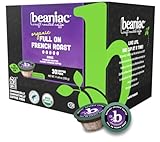
What if we could change that narrative? What if a coffee pod, instead of being an ecological endpoint, could complete a full circle, returning to the very earth from which it came? This isn’t a marketing pitch; it’s an exploration into the profound science packed into a new generation of consumer goods. To understand it, we must follow the life of a single pod—not just from the brewer to the bin, but from a shaded mountainside farm, through a fiery chemical transformation, and finally, into a microbial inferno. Our guide for this journey will be an object like a beaniac Organic French Roast pod, not because it is the only one, but because its existence is a perfect case study in applied science, from ecology to chemistry to materials engineering.

The Biography of a Bean: A Pact with Nature
Before a pod can be brewed, its story begins not in a factory, but in the rich, volcanic soil of a high-altitude farm, where 100% Organic Arabica beans are cultivated. The “Organic” designation is more than a health-conscious buzzword; it’s a commitment to soil science. It signifies an environment free from synthetic pesticides and fertilizers, fostering a thriving underground ecosystem of microbes, fungi, and earthworms that maintain the soil’s structure and fertility naturally. It’s a quieter, more patient way of farming that sees the land as a partner.
Look closer at the packaging, and you might see a small green frog—the seal of the Rainforest Alliance. This seal takes us deeper, into the field of ecology. It certifies that the farm is part of a system designed to protect entire ecosystems. Rainforest Alliance standards require farmers to conserve forests, protect watersheds, and even create “biological corridors”—strips of native vegetation that connect fragmented habitats. This allows wildlife, from insects to monkeys, to move freely, ensuring genetic diversity and ecological resilience. Your morning coffee, in this context, is brewed from a bean that grew on a farm actively designed to be a functional part of a larger, living landscape.

The Alchemy in the Roaster: Crafting Flavor from Fire
Once harvested, the green coffee beans are inert, holding little of the flavor we cherish. The magic happens in the roaster, a crucible where heat catalyzes some of the most complex reactions in the culinary world. Our specimen is a “Full On French Roast,” which tells a story of intense heat and radical transformation.
As the temperature climbs past 170°C (340°F), the Maillard reaction begins, a beautiful browning process between amino acids and reducing sugars that creates hundreds of nutty and toasty aromatic compounds. As the temperature soars higher, caramelization kicks in, breaking down the bean’s natural sugars to create the deep, bittersweet notes characteristic of a dark roast. A French Roast pushes this to the limit, causing natural oils to migrate to the surface and breaking down the chlorogenic acids, trading bright acidity for a deep, resonant richness with hints of “roasted praline”.
But for this marvel of flavor to avoid becoming just another piece of centuries-old trash, an even more profound science had to be engineered—not into the coffee, but into the vessel that holds it. The story now shifts from the crucible of the roaster to the quiet genius of the materials lab.
The Pod’s Promised Afterlife: A Feat of Material Science
For decades, the pod was an environmental villain—a fusion of plastic, aluminum, and paper, impossible to separate and recycle efficiently. This is where our case study takes its most significant turn. The pod is labeled “Commercially Compostable” and is BPI-Certified. These are not vague greenwashing terms; they are precise scientific standards.
It’s crucial to understand the distinction. “Biodegradable” is a largely meaningless term, as almost everything will biodegrade over centuries. “Compostable,” as defined by the Biodegradable Products Institute (BPI) following the rigorous ASTM D6400 standard, has a precise definition: the product must be proven to break down into carbon dioxide, water, and non-toxic biomass within a specific timeframe—typically under 180 days—in a specific environment.
The pod itself is a product of this standard. It’s made from bioplastics, often Polylactic Acid (PLA) derived from plant starches. The ring of our example pod is even more interesting, crafted from coffee chaff—the papery skin shed by beans during roasting. This is a brilliant example of upcycling, turning an industrial waste stream into a valuable component. The molecules of these bioplastics are like chains of Lego bricks built from plants. But unlike the incredibly resilient molecular chains of petroleum-based plastics, these chains have a built-in “unlock” mechanism.
The pod, now a marvel of plant-based engineering, holds a promise of returning to the earth. But this promise is not a guarantee. It’s a conditional contract, and the final, non-negotiable clause is written in the language of microbiology and intense heat. To unlock its afterlife, the pod must journey into a microbial inferno.
The Final Act: The Microbial Inferno and a Critical Catch
Here lies the catch, and the most critical piece of science for any consumer to understand: that unlock mechanism requires a very specific key. The pod’s promised return to the earth cannot happen in a landfill, nor, in most cases, in your backyard compost bin. It needs the inferno of an industrial composting facility.
These facilities are massive, controlled biological reactors. Organic waste is piled into long mounds where a specialized army of thermophilic (“heat-loving”) bacteria and fungi gets to work. As they consume the waste, their metabolic activity generates immense heat, raising the core temperature of the pile to a sustained 55-65°C (131-150°F).
This sustained, intense heat is the key. It triggers a process called hydrolysis, causing the long polymer chains of the PLA bioplastic to break apart into smaller pieces. Once unlocked and fragmented, the microbial army can feast on the smaller chains, rapidly converting the entire pod—ring, lid, filter, and coffee grounds—back into nutrient-rich soil. It is a man-made process that perfectly mimics and dramatically accelerates nature’s cycle. The absence of this industrial heat is why simply tossing the pod in your garden won’t work; the right microbes aren’t present in high enough concentrations, and the temperature never gets hot enough to initiate the breakdown. Thrown in a landfill, an anaerobic environment, it may languish for decades and release methane, a potent greenhouse gas.

The Last Mile: Your Role in the Relay Race
So, we arrive back where we started, mug in hand. But now, we see the full picture. The journey of this single coffee pod was a monumental collaboration—a “relay race” between a farmer practicing regenerative ecology, a roaster mastering applied chemistry, and an engineer designing materials for disassembly.
We, the consumer, are the runner of the final leg. If we drop the baton by tossing the pod in the regular trash, the entire race is lost. To complete the circle, you must ensure the used pod makes it into a collection system for commercial composting.
How can you do this? Start by searching online for “[Your City/State] + commercial composting” or “food scrap collection service”. Many municipalities are expanding their green bin programs to include food waste and BPI-certified compostable products. If such services are unavailable, this knowledge becomes a powerful tool for advocacy, allowing you to ask your local representatives for better waste infrastructure.
Understanding the science behind our consumption doesn’t complicate our lives; it enriches them. It transforms a simple daily ritual into a moment of connection with the complex systems that sustain us. A truly sustainable morning isn’t just a hopeful dream—it’s a choice we can make, grounded in the remarkable power of science, and completed by our own informed action.