
Beyond the Specs: A Practical Guide to the Black+Decker BD22MWSA Dehumidifier
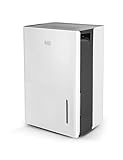
Let’s talk about that feeling. You walk down into your basement, and it hits you—a cool, heavy dampness in the air, carrying that unmistakable musty scent. The air feels sticky, clothes left down there feel perpetually clammy, and you can’t shake the feeling that you’re in a cave, not a part of your own home. This isn’t just about comfort; it’s about the health of your home and family. Uncontrolled humidity is a silent invitation for mold, mildew, and dust mites to thrive.
If you’re reading this, you’ve likely decided to fight back. You’re looking for a tool, and a popular name that keeps popping up is the Black+Decker BD22MWSA. Now, this isn’t going to be another “review” that just lists features from the box. Think of this as a conversation with a neighbor—the one who’s already tinkered with this stuff in his own workshop. We’re going to take a deep, practical look at this machine, not just what it does, but what it’s actually like to live with. Is it the right ally for your battle against the damp? Let’s find out.

The Unseen Enemy: Why That Damp Feeling Matters
Before we dissect any hardware, we need to respect the enemy: humidity. Specifically, “relative humidity” (RH), which is the amount of moisture the air is holding compared to the maximum it could hold at a given temperature. When RH gets too high, things start to go wrong.
Health organizations like the U.S. Environmental Protection Agency (EPA) have identified a “sweet spot” for indoor humidity: between 30% and 50%. Below that, you might get dry skin and irritated sinuses. But above it? That’s where the trouble starts. Once humidity consistently crosses the 60% threshold, you’re essentially rolling out the welcome mat for mold. Each spore is a tiny seed waiting for enough moisture to sprout on your drywall, in your carpets, or behind your stored boxes. This is more than just an ugly stain; it can impact air quality and trigger allergies.
So, the goal is clear: to force the RH in your space back into that healthy 30-50% zone. And for that, you need a machine designed for exactly this purpose.

Anatomy of a Solution: Deconstructing the BD22MWSA
Alright, let’s get this machine on the workbench. Forget the marketing buzzwords for a minute. What are the core parts of this dehumidifier, and how do they translate to your real-world situation?
The Power Core: What “22 Pints a Day” Actually Means
The headline feature of the BD22MWSA is its ability to remove 22 pints (about 2.75 gallons or 10.4 liters) of moisture from the air every 24 hours. This number can feel abstract, so let’s make it tangible. Imagine lining up ten large 1-liter soda bottles filled with water. That’s the amount of moisture this machine can pull out of your air, every single day. For a moderately damp basement or a large, stuffy room, this is a significant amount of firepower. In many cases, you’ll feel a noticeable difference in the air’s “heaviness” within the first few hours of operation.
The Coverage Conundrum: The Truth About Square Feet
Here’s where many people get confused, and it’s one of the most important things to understand. You’ll see this unit advertised for spaces up to “1,500 sq. ft.” Then, in the fine print, you’ll see another number: “280 sq. ft.” This isn’t a typo; it’s the result of a change in how dehumidifiers are rated by the Department of Energy (DOE).
The old 2012 standard (which gives the 1,500 sq. ft. number) was tested in less humid conditions. The new 2019 standard (giving the 280 sq. ft. number) is tested in much more humid, realistic environments. My advice? Pay more attention to the smaller number. It represents the machine’s effective power in a space that actually needs a dehumidifier. This unit is a champion for a damp 500-800 sq. ft. basement, a large master bedroom suite, or a humid laundry room. It will struggle to command a massive, 1,500 sq. ft. open-concept floor, but for its intended purpose, it’s sized just right.
The Control Panel: Simple Brains, But Are They Accurate?
The top-mounted controls are refreshingly simple. Power, fan speed (high/low), a timer, and up/down buttons to set your target humidity. It’s wonderfully straightforward. However, this brings us to a quirk mentioned by several eagle-eyed users: the built-in hygrometer (humidity sensor) isn’t perfectly accurate. Some report it reads about 9% lower than the actual room humidity. This means if you set it to 40%, it might not turn on until the room is actually at 49%. Is this a dealbreaker? Not at all, but it’s something you need to know to truly master the machine. We’ll talk about the simple fix for this in a bit.
The Sound Profile: Is 52dB a Dealbreaker?
At its highest fan speed, the BD22MWSA is rated at no more than 52 decibels (dB). In the real world, this sounds very similar to a modern refrigerator running. It’s a consistent, low hum. Would I want it right next to my head while I sleep? Probably not. But in a basement, a home office, or the corner of a living room, it quickly fades into the background noise of a home. On the low fan setting, it’s even less intrusive.
The Achilles’ Heel? The 0.8-Gallon Bucket
The water it collects has to go somewhere, and that’s into a 0.8-gallon (3-liter) bucket. In a very humid environment, this bucket will fill up fast—perhaps twice, even three times a day. Each time it’s full, the machine beeps and shuts off until you empty it. This is a conscious design trade-off. A smaller bucket makes for a more compact, lighter (33.1 lbs.), and more portable unit with its smooth-rolling casters. But if you’re away from home for long periods, or simply don’t want the chore of emptying it, a full bucket means your dehumidifier isn’t working. Thankfully, there’s a much better way.
Mastering Your Moisture-Fighting Ally: Pro Tips for the BD22MWSA
Owning this machine is one thing; getting the absolute most out of it is another. These are the tips that go beyond the instruction manual.
The Ultimate Hack: Embrace the Continuous Drain
This is the single most important feature to master. On the back of the unit is a small, threaded outlet. The dehumidifier comes with a short hose, but you can attach any standard garden hose. Run that hose to a floor drain or into a sump pump basin, and you have just liberated yourself from bucket duty forever. The machine will run continuously, draining itself by gravity. Just remember the golden rule of plumbing: water doesn’t flow uphill. Ensure the end of the hose is lower than the outlet on the machine, and that there are no kinks in the line. Set it up once, and you can truly “set it and forget it.”
Partnering Up: How a $10 Hygrometer Unlocks Precision
Remember that quirky internal sensor? Here’s the fix. Buy a cheap, reliable digital hygrometer (they cost about $10 online or at a hardware store) and place it in the middle of the room, away from the dehumidifier’s direct airflow. Let this little device be your “source of truth.” If you want your room to be at 45% humidity, and your independent hygrometer is reading 54%, simply adjust the Black+Decker’s setting down until it kicks on. You might find that setting the unit to “35%” consistently keeps your room at a true 45%. It’s a small extra step that gives you complete and accurate control.
Strategic Placement for Victory
Don’t just shove the dehumidifier against a wall in the corner. These machines work by pulling in damp air, chilling it to condense the water, and blowing out drier, slightly warmer air. For it to work efficiently, it needs to breathe. The manual suggests at least 8-12 inches of clearance on all sides. Place it in a central location if possible, allowing it to create a circulation pattern that covers the whole room.
The 2-Minute Ritual: Keeping the Filter Clean
Behind the front grille is a washable mesh filter. Its job is to catch dust and pet hair before it can clog up the machine’s internal coils. A clogged filter restricts airflow, making the unit work harder, use more electricity, and remove less water. Make it a habit to check it once every couple of weeks. Just slide it out, rinse it under cool water (no soap needed), let it dry completely, and slide it back in. This simple two-minute task is the best thing you can do to ensure its longevity and efficiency.

The Bottom Line: Is the Black+Decker BD22MWSA Your Solution?
After putting it through its paces on our virtual workbench, a clear picture emerges. The BD22MWSA is a solid, dependable, no-frills workhorse. It’s an Energy Star certified appliance, meaning it’s efficient to run. Based on its 250-watt power draw and average U.S. electricity rates, running it 24/7 would typically add around $15-20 per month to your utility bill—a small price for a mold-free basement.
It’s a perfect fit for you if:
* You need to tackle humidity in a small-to-medium-sized basement, a large bedroom, or a utility space (up to about 800 sq. ft.).
* You value simplicity and don’t want to pay for complex features like Wi-Fi apps.
* You plan to use the continuous drain feature for hassle-free operation.
* You appreciate a compact, portable design that’s easy to move around.
You might want to look elsewhere if:
* You have a very large (1000+ sq. ft.) or extremely wet basement that requires a higher-capacity machine.
* You are extremely sensitive to noise and plan to use it in your immediate sleeping area.
* The idea of emptying a bucket multiple times a day is a definite non-starter, and you have no access to a floor drain.
In the end, choosing the right tool is always about understanding the job and the tool’s true nature. The Black+Decker BD22MWSA isn’t perfect, but its “flaws” are transparent and easily managed. When you understand its quirks and use it smartly, it becomes a powerful and cost-effective ally in the essential fight for a dry, comfortable, and healthy home.