Kicking Horse Kick Ass: The Science and Soul of a Bold, Ethical Brew
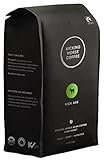
The name lands like a gauntlet thrown down on the breakfast table: “Kick Ass.” It’s a bold promise, an invitation to something more than just a morning ritual. It suggests a jolt, a powerful experience designed to launch you into your day. But what, precisely, makes a coffee truly “kick ass”? For a coffee scientist, the answer extends far beyond a caffeine punch. It requires a depth of character, a mastery of craft, and a story rooted in unwavering integrity. This is the story we uncover when we dissect Kicking Horse Coffee’s signature dark roast—a brew as robust in its ethical commitments as it is in its flavor.
Born amidst the majestic Canadian Rocky Mountains, Kicking Horse has built its philosophy on a simple, powerful idea: coffee should be “good and fair for the coffee drinkers, the farmers, and the planet.” The Kick Ass blend is the embodiment of this ethos. So, let us embark on a journey. We will explore the fiery alchemy of its roast, trace the noble lineage of its beans from volcanic islands to high-altitude farms, decode the profound meaning behind the seals on its bag, and finally, master the art of coaxing its full potential into your favorite mug. This is the anatomy of how science, passion, and conscience conspire to create an undeniably extraordinary coffee experience.

The Alchemist’s Fire: The Art and Science of a Transformative Dark Roast
The first encounter is sensory: the deep, lustrous brown of the beans, shimmering with a delicate sheen of oils. This is the visual signature of a dark roast, the result of a transformative journey inside the fiery heart of a roasting drum. It’s not merely cooking; it’s a carefully controlled pyrolytic process, an alchemical act that fundamentally rewrites the bean’s chemical and physical identity.
As green beans, smelling faintly of vegetation, tumble into the roaster, rising temperatures trigger a cascade of complex reactions. The most famous are the Maillard reactions, a dance between amino acids and sugars that creates hundreds of new aromatic compounds. It’s the same magic that gives a seared steak its savory depth and bread its golden crust. As the roast deepens past the “first crack”—an audible pop as moisture escapes—and ventures toward the “second crack,” these reactions intensify, creating nutty, malty, and savory notes.
Simultaneously, caramelization takes the stage, browning the sugars themselves to create notes of toffee and caramel. For a blend like Kick Ass, described as “sweet, smoky, audacious,” these processes are pushed to their creative limits. The “sweet” and “molasses” notes in its profile come from this deep caramelization. The “smoky” character arises from the thermal degradation of the bean’s organic matter, producing phenolic compounds. But this leads to the central challenge of dark roasting: The Dark Roast Dilemma. The very process that creates these bold, comforting flavors can also obscure the subtle, unique characteristics of the coffee’s origin. It’s a fine line to walk. A skilled roaster must navigate this edge, developing the deep, smoky notes without tipping into an acrid, generic char. The goal is boldness without sacrificing complexity, a feat Kicking Horse aims to achieve. It’s also here we can bust a common myth: dark roasts don’t necessarily pack more caffeine. Since roasting causes beans to lose mass and expand, a scoop of lighter, denser beans may contain slightly more caffeine than a scoop of the darker, lighter beans.

A Journey to the Source: From Indonesian Earth to South American Highlands
But this fiery alchemy in the roaster is only half the story. The magic begins thousands of miles away, in the ancient soils where these beans are born. To truly understand the soul of this coffee, we must journey to its source.
Kicking Horse proudly uses 100% Coffea arabica beans, the aristocrat of the coffee world. Compared to its hardier cousin, Robusta, Arabica contains nearly 60% more lipids and almost twice the concentration of sugars. These compounds are the essential raw materials, the flavor precursors that the roaster’s fire will later transform into a complex aromatic symphony.
The journey takes us to two key regions: Indonesia and South America. In Indonesia, particularly islands like Sumatra, the beans are shaped by volcanic soil and a unique processing method known as “Giling Basah” or wet-hulling. This technique, where the parchment layer is removed from the bean at a high moisture content, is largely responsible for the classic Indonesian profile: a full, syrupy body, low acidity, and a distinct, sought-after “earthy lingering finish”—a foundational note in the Kick Ass blend.
From the earthy bass notes of Indonesia, the blend finds its melody in South America. The continent’s diverse coffee-growing landscapes, from the high Andes to Brazil’s rolling hills, provide beans that can bring balance, sweetness, and subtle complexity. This careful interplay of origins is crucial. It’s how the blend avoids the one-dimensional trap of some dark roasts, layering the bold, earthy Indonesian character with the inherent sweetness and nuance of its South American counterparts.
More Than a Label: Decoding the Seals of Integrity
Having journeyed from the highlands of South America to the volcanic islands of Indonesia, the beans arrive with a rich heritage. But they also carry something else: a series of promises, stamped on the bag like seals of integrity. What do these labels truly mean? They are the coffee’s passport, and each stamp tells a story of responsibility.
The USDA Organic seal signifies a profound commitment to ecological farming. It goes beyond a simple “no synthetic pesticides” rule. It’s a holistic approach to agriculture that focuses on building healthy, living soil through natural methods like composting and cover crops. This creates healthier plants and protects water sources and farmworkers from chemical exposure.
The Fairtrade International logo represents a commitment to economic and social justice. For smallholder farmers facing volatile market prices, Fairtrade provides a crucial safety net: a minimum price that ensures they can cover their costs of sustainable production. Additionally, a “Fairtrade Premium” is paid to the farmers’ cooperative, a communal fund they can democratically invest in community projects like new schools, healthcare, or improving their farming equipment.
Finally, the term shade-grown points to a method of farming that is an ecological boon. By growing coffee under the canopy of native trees, these farms mimic a natural forest. This slows the coffee cherry’s ripening, allowing it to develop more concentrated sugars and acids, leading to a more complex flavor. More importantly, these farms become vital havens for biodiversity. The Smithsonian Migratory Bird Center has found that shade-grown coffee farms can support a diversity of bird species nearly equivalent to an undisturbed forest, making every cup a small act of conservation.
From Bean to Cup: Mastering the Brew for a Bold Experience
With a profound understanding of its journey and the values it represents, the final, most intimate chapter of this coffee’s story is about to unfold—in your own kitchen. The bean has done its part; now, the art of brewing is in your hands.
The single most important step you can take to honor this journey is to use whole beans and grind them just before brewing. Once coffee is ground, its surface area increases exponentially, exposing its delicate aromatic compounds to oxygen. This oxidation is the enemy of freshness, quickly leading to a flat, stale cup. Keeping the beans whole is like keeping their flavor locked in a natural, protective capsule.
The goal of brewing is perfect extraction. To achieve this with Kick Ass, consider these methods and starting points:
| Brewing Method | Recommended Grind | Coffee-to-Water Ratio | Water Temp. | Time | Why it Works for this Blend |
| ————— | —————– | ——————— | —————– | ——————- | —————————————————————- |
| French Press | Coarse | 1:15 (e.g., 30g:450g) | 200°F / 93°C | 4 minutes | Full immersion creates a rich, full-bodied cup that enhances its smoky, chocolatey notes. |
| Pour Over | Medium-Coarse | 1:16 (e.g., 22g:352g) | 195°F / 90.5°C | 3-4 minutes | A slightly cooler water temp prevents over-extraction of bitter compounds, highlighting its sweetness. |
| Cold Brew | Extra Coarse | 1:8 for concentrate | Room Temp / Cold | 12-18 hours | Low-and-slow extraction results in a smooth, low-acid brew that amplifies the molasses and licorice notes. |

The Verdict: A Brew of Conviction
The journey of Kicking Horse Kick Ass, from a shade-grown cherry in Indonesia to the aromatic brew in your mug, is a testament to a simple truth: a truly “kick ass” coffee is the sum of countless conscious choices. Roasted with precision in the Canadian Rockies, its boldness is not just a matter of flavor profile, but of conviction.
It’s a conviction that a dark roast can be complex and compelling. A conviction that coffee can be grown in a way that enriches both the earth and the lives of the farmers who cultivate it. When you savor this deep, sweet, and smoky cup, you’re tasting more than just coffee. You’re experiencing a connection to a global community and a philosophy of doing things the right way, not the easy way. This brew is an invitation not just to wake up, but to do so with a deeper appreciation for the craft, care, and conscience that fill your cup. And that, in itself, is a powerful way to start the day.