Your Aquarium Filter is Lying to You — And Why That’s a Masterpiece of Engineering
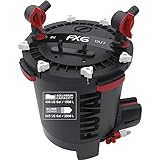
There’s a number on the box of almost every powerful aquarium filter that feels like a promise of biblical proportions. For one particular beast of a machine, the Fluval FX6, that number is 925 gallons per hour. Nine hundred and twenty-five. It’s a torrential, awe-inspiring figure that conjures images of a fire hose cleaning a teacup. Yet, any seasoned aquarist who has installed such a device knows a quiet truth: the gentle, steady current returning to their tank is nowhere near that violent.
This discrepancy feels, at first, like a lie. A classic case of marketing inflation. But it’s not. In fact, this gap between the number on the box and the reality in your cabinet is not a deception, but an invitation—an entry point into the hidden, and far more fascinating, world of physics, microbiology, and intelligent design that governs the delicate art of keeping a giant glass box of water alive.
This isn’t a product review. This is an exploration of the elegant engineering challenges that your aquarium filter is solving, every second of every day. And that impressive machine will serve as our perfect case study.

The Physics of Flow: A Constant Battle Against Gravity and Friction
The 925 GPH figure is what engineers call the “free-flow” or “zero-head” rating. It’s the absolute maximum amount of water the pump can move in a perfect, frictionless vacuum, with no work to do. It’s like measuring a champion sprinter’s top speed on a frictionless treadmill that’s tilted downhill. Impressive, but not representative of running a real-world marathon.
The moment you attach hoses, fill the canister with media, and ask the pump to push water vertically upwards back into your aquarium, you introduce two formidable opponents: friction and gravity. Every bend in the hose, every layer of sponge, and every inch of vertical climb adds to what’s known as “head pressure”—the total resistance the pump must overcome.
This is where the real engineering comes into play. A pump’s performance is not a single number, but a curve. As head pressure increases, the flow rate decreases. The actual circulation of a filter like the FX6, a more honest figure of around 563 GPH, is the result of a powerful motor finding its equilibrium on this curve. It’s a number born from a battle against the fundamental laws of physics.
Understanding this isn’t just academic; it’s practical wisdom. It teaches us that the true measure of a filter’s power isn’t its theoretical maximum, but its ability to sustain a high, effective flow rate under real-world load. It’s a quiet testament to a design that anticipates resistance and is engineered not just for power, but for perseverance.

The Silent Architects: Building a Microbial Metropolis
So, what is all this hard-won flow for? The common assumption is that a filter’s job is to mechanically strain out fish waste and debris. While it does do that, it’s arguably its least important function. The filter’s true purpose is far more profound: it’s a piece of real estate. It is a carefully designed city for billions of invisible, indispensable architects.
The real cleanup crew in any aquarium is bacteria. This is the magic of the Nitrogen Cycle:
- Fish produce highly toxic ammonia (NH_3) as waste.
- A group of bacteria, known as ammonia-oxidizing bacteria (AOB), consumes the ammonia and converts it into nitrite (NO_2^-), which is still very toxic.
- A second group, nitrite-oxidizing bacteria (NOB), consumes the nitrite and converts it into nitrate (NO_3^-), a far less harmful compound that can be absorbed by plants or removed with water changes.
The primary engineering challenge of an aquarium is not just to filter water, but to cultivate a massive, thriving population of these two types of bacteria. They don’t just float around; they need a surface to cling to, forming a complex community called a biofilm. The more surface area you provide, the larger your bacterial city can be, and the more waste it can process.
This is why the FX6’s cavernous 1.5-gallon media capacity is its most critical feature. It’s not just an empty space; it’s the foundation for a microbial metropolis capable of supporting the “bioload” of a 400-gallon aquatic world. The porous ceramic rings and sponges placed inside are not simple rubble; they are scientifically engineered high-rises, made from materials like sintered glass to possess an enormous internal surface area. The filter’s internal design, which forces water through these media baskets without letting it bypass them, ensures that every single drop is forced to travel through the bustling streets of this bacterial city. The filter isn’t just cleaning the water; it’s sustaining the very life that cleans the water.
When Machines Think: The Art of a Self-Preserving Pump
The most elegant engineering doesn’t just solve a problem; it anticipates one. And in the world of water pumps, one of the greatest enemies is air. Air can get trapped in a filter during a water change or through a tiny leak, creating an air lock. This trapped air drastically reduces efficiency, creates a rattling, grinding noise, and, in a worst-case scenario, can lead to a phenomenon called cavitation. This is where tiny air bubbles form and collapse with such force that they can physically pit and erode the pump’s spinning impeller over time.
A traditional pump would simply grind away, becoming less efficient and noisier until it eventually failed. The modern solution is more intelligent.
Inside the FX6 is a microcontroller—a tiny computer running a specific set of instructions. This is its “Smart Pump” technology. Its most brilliant instruction is a simple one: every 12 hours, the pump briefly stops. This pause allows any small, trapped air bubbles to coalesce and be passively pushed out of the system when it restarts.
This is not a feature of convenience; it is a profound act of self-preservation. It’s an idea borrowed from the world of large-scale industrial machinery, where preventive maintenance is paramount. Instead of waiting for a catastrophic failure, the system performs a tiny, automated corrective action, ensuring its own longevity and peak performance. It’s the application of code to solve a problem of physics, a beautiful example of how intelligence can make a mechanical system more robust.

Conclusion: Beyond Cleanliness, Appreciating the System
So, no, your filter isn’t lying to you. The number on the box is the sprinter’s top speed, but the gentle current in your tank is the marathoner’s steady, sustainable pace. That quiet hum from your cabinet is the sound of a city at work, where billions of bacteria perform a constant, life-sustaining alchemy. And that momentary pause you might not even notice is a machine intelligently caring for itself.
To look at a high-performance filter and see only a device for making water clear is to miss the point entirely. What you’re really looking at is an elegant, multi-disciplinary solution to a complex problem. It’s a system that masters fluid dynamics, cultivates a delicate ecosystem, and uses intelligence to ensure its own resilience. Understanding this transforms you from a mere consumer into an appreciative manager of a complex system. And perhaps it encourages us to look closer at the other objects in our lives, to find the hidden engineering and silent science that so often lies just beneath the surface.