
The Number That Lied: On Sensor Drift and the Quiet Crisis of Trusting Our Tools
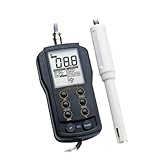
It started with a yellowing leaf. Just one, on a basil plant in my first-ever hydroponic setup. I’d done everything by the book. The grow lights were on a perfect schedule, the nutrient solution was a pricey, well-regarded brand, and I checked the numbers daily. Especially the pH. My little digital meter, a cheap and cheerful Amazon find, gave me a reassuring 6.2 every single time. Perfect.
Yet, the yellowing spread. The leaves drooped. The whole system, a monument to my meticulous planning, was inexplicably dying. The culprit, as I would later discover after tearing my hair out and finally investing in a second, better meter, was that number. My trusted 6.2 was a lie. The actual pH of my solution had crept down to a toxic 4.5. My meter hadn’t broken; it had just… drifted. It was a quiet, insidious betrayal by a tool I had implicitly trusted.
This experience taught me a fundamental lesson, not just about gardening, but about our relationship with technology. In a world saturated with digital readouts and data points, we’ve been conditioned to believe that a number on a screen is a fact. It is not. It is an interpretation, a fragile consensus between a physical sensor and the messy reality it’s trying to measure. And the most important feature of any tool is not what it tells you, but how much you can trust it.

The Invisible World We Try to Tame
To understand why this matters, you have to appreciate the delicate balancing act of a system like hydroponics. Without soil to act as a natural buffer, the nutrient solution is everything. Its pH is the absolute gatekeeper of nutrition. Imagine a locked pantry full of food; the pH is the key. For most plants, that key only works between a pH of 5.5 and 6.5. Outside that narrow window, even if the water is rich with nutrients, the plant’s roots are chemically incapable of absorbing them. My basil plants were, in effect, starving in a sea of plenty.
The other critical number is Electrical Conductivity, or EC. It’s a measure of the total nutrient strength—the “saltiness” of the solution. Too low, and the plants are underfed. Too high, and their roots get “burned.” It’s a constant dance between these invisible parameters.
This challenge isn’t unique to growing plants. It’s the same fundamental problem faced by a home brewer trying to control fermentation, an aquarist maintaining a reef tank, or a scientist in a lab. We are all trying to manage invisible worlds, and our only window into them is through the lens of our instruments. But what happens when the lens is warped?
The Universal Foe: Sensor Drift
Here is the sad, beautiful, and inconvenient truth about every sensor in existence: it is actively trying to fail. The process is called sensor drift, and it’s an inescapable law of physics and chemistry. It’s not a bug or a manufacturing defect; it’s the natural, graceful aging of a physical object.
In a pH meter, the sensor is typically a sophisticated glass bulb. This glass isn’t inert; its surface is a hydrated layer that actively interacts with the water to generate a tiny voltage, which the meter then translates into a pH number based on a principle called the Nernst equation. But this hydrated layer ages. It gets contaminated by oils and salts. The reference solution inside the probe slowly leaches out or becomes corrupted.
Think of it like a finely crafted mechanical watch. No matter how well you make it, it will, over time, lose or gain a few seconds each day. You don’t throw it away; you simply re-calibrate it against a trusted time source. Your pH meter is that watch, and the nutrient solution is a harsh environment that accelerates its aging. My cheap meter wasn’t just inaccurate; it lacked any mechanism to tell me it was becoming inaccurate. It smiled 6.2 at me all the way to the grave.
An Engineer’s Answer to the Question of Trust
This is where the story pivots from a problem of science to a solution of engineering philosophy. How do you design a tool for a world where failure is a given? I eventually found an answer in a device that, on the surface, looked like many others: the Hanna Instruments HI9813-6N.
I’m not mentioning it as an advertisement, but as a fascinating case study in design honesty. When you look past the specifications, you see a collection of thoughtful solutions to that core problem of trust.
The first solution is an admission of guilt. The meter features something called CAL CHECK™. During calibration, it doesn’t just adjust the reading; it runs a diagnostic on the probe’s health. It checks its response time and condition, and if the probe is aging or dirty, it tells you. This is a profound design choice. It is an admission from the engineers that their sensor will degrade, and it empowers the user with the knowledge of when. It replaces blind faith with informed confidence.
The second solution is designing for the battlefield, not the lab. The meter’s probe (the HI1285-6, for the curious) is built differently. Instead of a tiny, easily clogged ceramic pinhole for its junction, it uses a more robust fiber junction. Its internal electrolyte is a gel, not a liquid, making it less prone to leaking in the volatile chemical soup of a fertilizer tank. These aren’t flashy features. They are quiet, rugged, and born from an understanding of how things fail in the real world.
The third solution is an unsung hero: Automatic Temperature Compensation (ATC). Temperature dramatically affects both pH and EC readings. A less sophisticated meter either ignores this, or forces you to measure the temperature and look up a correction chart. A well-engineered tool measures the temperature for you and corrects the reading in real-time, silently, without you ever needing to know. It’s another layer of reliability, another reason to trust the number.
The True Economics of Reliability
This brings us to a difficult truth. A tool like this costs more than the simple meter that killed my basil. And it’s easy to look at two devices that claim to do the same thing and choose the cheaper one. But the cost of a tool is not its price tag. The true cost of my first meter was a failed crop, wasted time, and a loss of confidence in the process.
An investment in a reliable instrument is not for a brighter screen or more buttons. It’s an investment in certainty. It’s the price of knowing that the number you’re basing your decisions on is a faithful representation of reality. It’s buying a bridge of trust to the invisible world you’re trying to control.
The lesson from my yellowing basil has stayed with me. In an age of overflowing data, we are drowning in numbers but starved for integrity. The most critical skill is learning to see past the readout and understand the nature of the tool that produces it. Because the greatest instruments are not the ones that just give us an answer, but the ones that are honest about the fragility of that answer, and in doing so, earn our trust.