
The Architecture of Compact Living: How Micro-Kitchens Are Redefining Urban Domesticity
The modern city is undergoing a structural metamorphosis. As urbanization accelerates globally, the average square footage of residential spaces is shrinking. From the “apodments” of Seattle to the micro-condos of Toronto and the renovated studio lofts of New York, density is the new destiny. This architectural shift is forcing a radical reimagining of the domestic sphere’s most complex room: the kitchen.
Gone are the days when a sprawling six-burner range was the default standard of luxury. In the era of the micro-kitchen, luxury is defined by modularity, efficiency, and intelligence. The appliance industry is responding with a new class of “right-sized” technologies—devices that deliver professional-grade performance without the spatial footprint.
The 24-inch and 12-inch electric cooktops are at the vanguard of this movement. They are not merely smaller versions of their larger counterparts; they are the foundational blocks of a new lifestyle. This article explores the sociology of compact living, the design philosophy of the micro-kitchen, and how devices like the VBGK Electric Cooktop serve as critical enablers of this urban evolution.
Part I: The Rise of the “Micro-Kitchen”
To understand the appliance, we must first understand the environment. The “Micro-Kitchen” is not simply a small kitchen; it is a design ethos that prioritizes function over form, and flexibility over fixity.
The Urban Density Equation
Data from urban planning institutes suggests that by 2050, nearly 70% of the world’s population will live in cities. As land value skyrockets, developers are incentivized to build smaller, more efficient units. The “linear kitchen” or “kitchenette” is replacing the traditional “work triangle” layout. In these spaces, every inch of countertop is valuable real estate.
A standard 30-inch range dominates a small studio apartment, visually and spatially. It dictates the entire layout. In contrast, a 12-inch or 24-inch drop-in cooktop liberates space. It allows for more counter area for preparation, which is often the scarcest resource in a small kitchen. This shift allows the kitchen to disappear when not in use, blending seamlessly into the living area—a crucial feature in open-plan studio living.
Decoupling the Oven and the Hob
Historically, the “stove” was a monolithic unit combining a cooktop and an oven. The micro-living trend has driven the decoupling of these two functions. Modern urbanites often cook differently than previous generations; they may sear a steak or boil pasta (cooktop tasks) frequently, but roast a turkey (oven task) rarely.
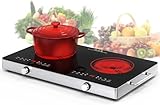
By separating the cooktop from the oven, designers can place a two-burner radiant unit, such as the VBGK Electric Cooktop, on the counter, and install a convection microwave or a small wall oven elsewhere—or omit the large oven entirely in favor of high-tech countertop ovens. This modularity offers unprecedented flexibility. A user can install the cooktop on an island, a rolling cart, or even in a “hidden” drawer in extreme micro-apartments.

Part II: The Versatility of the “2+0” and “1+1” Lifestyle
The reduction in burner count—from the traditional four or five down to two—is often viewed as a compromise. However, lifestyle analysis reveals it is actually an optimization for the vast majority of modern cooking habits.
The “Two-Burner” Reality
Observational studies of home cooking behaviors show that even owners of large ranges rarely use more than two burners simultaneously. The “active” cooking zone usually involves one pot for boiling/simmering and one pan for sautéing/frying. The third and fourth burners often end up as passive storage for cool pots.
A dual-burner electric cooktop aligns perfectly with this reality. It provides exactly the capacity needed for 90% of meals without the spatial waste of the unused burners. The VBGK model, for instance, features two independent heating zones (1200W + 1200W), allowing for a complete meal—pasta and sauce, or steak and vegetables—to be prepared simultaneously.
Portability as a Feature
Another dimension of the compact cooktop is its potential for portability. While many are installed as built-in units (drop-in), their form factor allows them to be used as countertop units. This creates a “nomadic” kitchen capability.
- The RV and Van Life Movement: The explosion of “Van Life” and recreational vehicle living requires appliances that are durable, vibration-resistant, and power-efficient. A robust glass-ceramic cooktop meets these needs better than gas (no fuel canisters to store) or induction (less sensitive to power fluctuations).
- The Auxiliary Kitchen: For large households, a portable two-burner unit acts as an overflow station during holidays. It can be set up in a dining room or patio to keep glazes warm or boil corn, extending the kitchen’s capacity temporarily.
- The Dorm and Temporary Housing: For students or short-term renters, a high-quality portable cooktop transforms a basic room into a functional home, allowing for healthy cooking without a renovation.
Part III: Design Aesthetics: The “Black Mirror” Effect
In a small apartment, appliances are always visible. They are furniture. The aesthetic integration of the cooktop is therefore critical to the visual harmony of the home.
Visual Silence
The concept of “Visual Silence” in interior design refers to elements that do not demand attention or create visual clutter. A traditional gas stove with heavy iron grates, knobs, and burner caps is “visually loud.” It screams “utility.”
Radiant glass-ceramic cooktops offer the opposite. When off, they are essentially a black mirror. They reflect the light and colors of the room, helping them to blend in rather than stand out. This is particularly important in studio apartments where the kitchen is part of the bedroom and living room. The seamless black glass of units like the VBGK contributes to a sense of order and minimalism, making the small space feel larger and less cluttered.
Durability in Multi-Use Spaces
In a micro-apartment, the kitchen counter often doubles as a desk, a bar, or a storage area. The robustness of vitroceramic glass is a key asset here. Unlike a gas stove with uneven grates, a flat electric cooktop can serve as additional counter space when not hot. You can place a cutting board on it, sort mail, or set down a laptop (ensuring the lock is on!).
This dual-use capability effectively expands the usable surface area of a small kitchen. The scratch-resistant nature of the glass ensures that it maintains its aesthetic appeal even after serving as a temporary workbench.

Part IV: The Ergonomics of Control in Diverse Households
As urban populations diversify, universal design becomes increasingly important. We have multi-generational households living in tighter quarters, requiring appliances that are safe and usable for everyone from tech-savvy teenagers to octogenarians.
The Cognitive Load of Interfaces
Complex digital interfaces can be a barrier to entry. Navigating menus to boil water adds unnecessary cognitive load. This is where the resurgence of the mechanical knob in modern appliances finds its justification.
Knobs utilize “muscle memory.” A user knows instinctively that turning clockwise increases power. There is no need to look closely at a screen or tap precisely on a small icon. This is particularly vital for users with arthritis, tremors, or vision impairments.
The VBGK Electric Cooktop implements this philosophy by pairing the reliability of knobs for the primary function (heat) with the precision of touch controls for secondary functions (timer, lock). This hybrid approach respects the diverse physical capabilities of users in a multi-generational home. It ensures that the basic function of the device—cooking food—is accessible to all.
Safety in Tight Quarters
In a small kitchen, the risk of accidental contact is higher. You are always closer to the heat source. Therefore, safety features are not just “nice to have”; they are architectural necessities.
- Electronic Child Locks: In a small apartment, a toddler is never far from the stove. Being able to electronically disable the unit prevents disaster.
- Residual Heat Indicators: Because the cooktop might be used as a table when cool, clear visual warnings (“H” indicators) when it is hot are essential to prevent burns.
- Overheat Protection: In a small space, ventilation may be limited. Automatic shut-off systems that detect abnormal heat buildup add a layer of passive fire protection that is crucial for high-density housing blocks.

Part V: The Economic Logic of the Electric Transformation
Finally, the shift to compact electric cooking is driven by hard economic logic.
Infrastructure Agnosticism
Gas requires plumbing. It requires venting. It requires a utility connection that may not exist in a basement suite or a garage conversion. Electricity is ubiquitous.
Installing a 110V electric cooktop requires virtually no infrastructure modification in most US homes. This “plug-and-play” nature dramatically lowers the barrier to entry for creating a kitchen. It allows homeowners to create an “in-law suite” or an income-generating rental unit (ADU – Accessory Dwelling Unit) for a fraction of the cost of installing gas lines.
Energy Cost and Maintenance
While electricity can be more expensive than gas per unit of energy in some regions, the efficiency of transfer and the lack of standby heat loss (pilot lights or warm drafts through vents) often equalize the operating costs for small households. Furthermore, the maintenance of a glass-ceramic top is minimal compared to the cleaning required for gas burners, saving time and money on cleaning products.
The VBGK unit’s compatibility with 110V power further democratizes this cost saving, avoiding the need for expensive electrical panel upgrades that 240V induction units might require.
Conclusion: Small is Beautiful
The 24-inch and 12-inch electric cooktops are more than just space-saving appliances; they are the hardware of a new urban philosophy. They represent a rejection of excess and an embrace of efficiency. They acknowledge that a high quality of life does not require massive square footage, but rather, thoughtful design and reliable performance.
By combining the robustness of glass-ceramic materials, the versatility of radiant heating, and the accessibility of tactile controls, devices like the VBGK Electric Cooktop enable a lifestyle that is flexible, modern, and inclusive. Whether in a high-rise micro-condo, a suburban ADU, or a nomadic van, the micro-kitchen is the future of cooking, and the glowing electric hearth is its beating heart.