The Hardware Illusion: Why Expensive Screens Don’t Make Smart Calendars
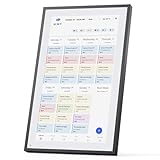
In the consumer electronics market, there is a pervasive illusion: that hardware equals value. We see a 21.5-inch, 1080p touchscreen, encased in a sleek frame, and we intuitively assign it a high value. We think, “This is a big, beautiful screen; therefore, it must be a good product.” This is the Hardware Illusion.
The LOOFII C-3 Smart Digital Calendar, priced at a premium $399, is a textbook example of this illusion. On the surface, it checks every box: a massive display, Wi-Fi connectivity, and promises of family organization. Yet, beneath the glass, user reviews reveal a crumbling infrastructure of buggy software, missing features, and nonexistent support.
This article deconstructs the phenomenon of “Zombie Hardware”—devices that are physically robust but digitally brain-dead. We will explore the economics of the ODM (Original Design Manufacturer) supply chain, the hidden costs of software maintenance, and why a beautiful screen is worthless without a competent operating system.
The Supply Chain of Sameness: The ODM Model
To understand why products like the LOOFII C-3 exist, we must look at how they are made. Often, these are not designed from scratch by the brand on the box. They are products of the ODM Model.
* The Shell: A factory in Shenzhen produces a generic “Smart Display” hardware reference design. It creates thousands of units with 21.5-inch screens, Rockchip processors, and basic Android boards.
* The Badge: Various brands buy these units, slap their logo on the bezel, and load a basic, often white-labeled software package onto it.
This explains why the hardware can feel “heavy and durable” (as users noted) while the software feels “like it’s from 5 years ago.” The hardware manufacturing is a mature, commoditized industry. You can buy excellent screens by the container load. But software? Software is artisanal. It requires ongoing development, bug fixing, and server maintenance.
Brands that focus on moving hardware often treat software as a one-time “Setup Cost” rather than an ongoing “Service Cost.” The result is a device like the C-3: a beautiful body with a lobotomized brain.

The Software Void: Anatomy of Sync Failure
The core promise of a digital calendar is Synchronization. It must pull data from Google, iCloud, and Outlook invisibly and reliably.
User reviews for the C-3 are littered with phrases like “Didn’t connect to calendar” and “Spent an hour… with no luck.” Why is this so hard?
The API Economy
Syncing isn’t magic; it’s API (Application Programming Interface) management.
* Google’s Gatekeeping: Google and Apple constantly update their security protocols (OAuth 2.0). They require apps to be verified, maintain security tokens, and adhere to strict rate limits.
* The Maintenance Debt: If the software developer doesn’t update the app to match Google’s latest API changes, the sync breaks. A “Hardware-First” company often lacks the dedicated software team to track these changes.
* The “Email Length” Bug: One reviewer noted a bizarre bug: the device wouldn’t accept an email address longer than 25 characters. This is a classic “Legacy Code” error—a hard-coded limit in a database field set up by a programmer who didn’t anticipate long usernames. It’s a tell-tale sign of unpolished, untested software.
Android in the Wild: The Security Risk
The C-3 runs on Android. But which Android? Often, these devices run heavily modified, older versions (like Android 10 or 11) that are no longer receiving security patches from Google.
* The Security Gap: A wall calendar connects to your home Wi-Fi and logs into your Google account. If the underlying OS has unpatched vulnerabilities, it becomes a potential backdoor into your digital life.
* App Incompatibility: As the Android ecosystem moves forward, older OS versions lose compatibility with modern apps. The “sluggish” performance users report is often the result of modern app code trying to run on an unoptimized, legacy OS kernel.

The Support Vacuum: Ghost Brands
Perhaps the most damning critique of the LOOFII C-3 is the lack of support. “No email contact, no chat option, and no call center,” wrote one frustrated user.
This is not an accident; it is a business model choice.
* Cost of Support: Human customer support is expensive. Providing live chat or phone support can cost 5-10 per interaction.
* The “Fire and Forget” Strategy: Some brands operate on a “Fire and Forget” basis. They sell the inventory, collect the cash, and hope the return rate is low enough to remain profitable. They have no incentive to solve user problems because they are not building a long-term brand equity; they are liquidating hardware stock.
Conclusion: The Software is the Product
The lesson of the LOOFII C-3 is clear: In the era of the Smart Home, Software is the Product. The hardware is merely the delivery mechanism.
A $400 screen is worthless if the software driving it cannot perform the basic function of displaying a calendar. When evaluating a digital calendar, consumers must look past the inches of the screen and look at the frequency of app updates, the responsiveness of the developer, and the robustness of the sync engine. The illusion of hardware luxury is fleeting; the reality of software failure is forever.